

Native Platform Feature
A custom native platform channel demonstrated on a physical device — the point where you stop being limited by what a package already does.
- MethodChannel
- sensors_plus
A six-month practical Flutter course that takes you from building screens to shipping production apps — native platform access, clean architecture, performance tuning, your first AI feature and a signed release in both app stores.
The first three months cover the foundations — Dart, widgets, layouts, state management, async programming, live data, Firebase, testing and custom UI — taught from the first line of code. The next three months build on that base: platform channels and device features, Riverpod and GetX, generics and mixins, Clean Architecture with dependency injection, performance profiling and app-size reduction, a first in-app AI chatbot, on-device ML Kit, store publishing with signing and CI/CD, and a custom package published under your own name on pub.dev.
Key Highlights
The first three months cover the foundations — Dart, widgets, layouts, state management, async programming, live data, Firebase, testing and custom UI — taught from the first line of code. The next three months build on that base: platform channels and device features, Riverpod and GetX, generics and mixins, Clean Architecture with dependency injection, performance profiling and app-size reduction, a first in-app AI chatbot, on-device ML Kit, store publishing with signing and CI/CD, and a custom package published under your own name on pub.dev. You advance when your project passes review, not when the calendar says so. Every month covers clear topics, the packages you will use, the real-world problem it solves and the project you keep for your portfolio.
Every module ends in something you have built and a trainer has reviewed, so the list below is work you will have done rather than topics you will have heard about.
Provider, Bloc and Riverpod or GetX — with a written decision record
The syllabus is arranged so every module produces an asset rather than a set of notes. You will cover month 1 — dart programming, flutter basics & ui development, month 2 — state management, async, data & firebase, month 3 — testing, advanced ui & a signed production app, month 4 — platform integration, advanced state & dart, and finish with a live project built on Dart SDK & DartPad, Flutter SDK, Android Studio & Xcode. Modules run in the order a real project runs: foundations first, then the core skills, then applied work under supervision, then the portfolio and interview preparation that turn all of it into an offer letter.
The working knowledge the job description actually lists.
Month 3 — Testing, Advanced UI & a Signed Production App
The discipline that separates a demo from a deliverable.
4 weeks · 24 sessions
Topics covered
The toolchain
Everything below is installed on the lab machines and used on live client work, not shown once in a slide and forgotten.
Join from any stream. Six months is the length at which a complete beginner reaches a Flutter Developer job description rather than a trainee one, and the weekday and weekend batches both run the full course.
If you are finishing a BCA, B.Sc or B.Tech, this is the version that changes which interviews you are invited to. You arrive with a published package, a performance audit and an app in both stores.
If you already write code, the foundation months move quickly and the advanced months are the real value. Architecture, profiling, native channels and release engineering are what separate a widget-only developer from one who can ship a full native feature.
The weekend batch exists for people already earning. A published pub.dev package and a signed store release are the two things that let you quote higher on a client brief.
An app that runs and an app a business can ship are different pieces of software, and studios pay for the second — far fewer developers can hand over a codebase that survives a second developer, a store review and a year of feature requests. That gap is the whole argument for this course: there is local demand, there are budgets, and there are very few trained people to hand the work to.
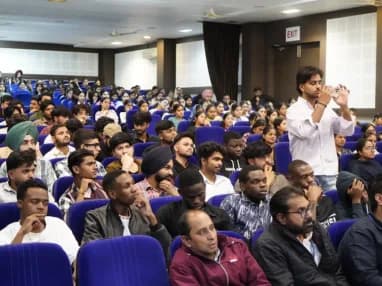
Build skills that hold up beyond the classroom.
What separates this from a playlist of tutorials is supervision on real work. From the second half of the course you build on live client projects with a trainer beside you, make decisions that have consequences, and correct them the following week. That loop is the skill. No employer in Phagwara will take your word for it without work they can inspect.
Be realistic about the money. A fresher who finishes with a working portfolio starts near the bottom of the band and moves quickly; someone who finishes with a certificate and nothing to show does not. The difference is entirely what you built.
The alternative is what most people try first: free videos, a cheap online course, six months of drifting, and knowledge you cannot demonstrate. A structured programme with live projects, a mentor who corrects you, an internship letter and a placement cell that actually calls employers is the difference between knowing the subject and being hired to do it.
Students reach the Phagwara centre from Banga, Nakodar, Kartarpur and the university belt, and the weekend batch exists so a job or a degree does not have to be paused to attend.
Every "make it do X natively" client request routes through MethodChannel. You will ship a real device-sensor feature callable from Dart, demonstrated on hardware.
You will refactor an earlier app into Clean Architecture with dependency injection through get_it, plus a before-and-after structure diagram. This is what lets you join a large codebase and know where new code belongs.
You will produce a documented before-and-after audit — frame-rate measurements, a memory profile and a reduced release build size, with the specific fixes applied. Performance work is invisible until it is missing.
You will publish a real Flutter plugin or package to pub.dev with documentation, a changelog and an automated test. That is verifiable proof of fluency a resume line cannot provide.
Complete the course with a portfolio of live projects and receive an industry-recognised certificate, plus a documented internship letter accepted by Punjab universities.
Recognised by employers across Punjab and beyond
Based on real client work, not a simulation
Live work you can show in any interview
CV review, mock interviews and hiring drives
Two certificates on completion — the course certificate and a separate capstone project certificate.
The roles this opens, what they pay in Punjab and beyond, and who is hiring for them — drawn from published job-market listings, not a brochure number.
Early career, and the most common destination from this course. Interviews test architecture judgement, testing discipline and whether a feature survives a code review. Show the refactored architecture, the tested feature suite and the performance audit.
The generalist studio role — client features, store releases and whatever the brief asks for next. The signed release and the documented versioning process are what make you billable from day one.
Ownership of the shared codebase across iOS and Android, including the native edges. The platform channel project is the piece of evidence this interview asks for.
Interviews test whether you can wire a real model into a real app safely, with a fallback for when it fails. The in-app chatbot and the on-device ML Kit scanner are the first two answers.
Salary outlook — Flutter Developer
Ships production cross-platform apps from one codebase. Pay here is set by demonstrable evidence — a published package and a store release move a candidate more than an extra certificate.
Indicative ranges compiled from public job-market listings. Actual offers vary by employer, skillset and interview performance.
A custom native platform channel demonstrated on a physical device — the point where you stop being limited by what a package already does.
A state-management rebuild on Riverpod or GetX with an architecture-decision record explaining which you would pick and why.
An earlier app restructured into Clean Architecture with dependency injection and a before-and-after structure diagram.
A documented before-and-after audit: frame-rate measurements, a memory profile and a reduced release build size, with the specific fixes applied.
A working chatbot backed by a real text-generation API with local conversation history, plus an on-device OCR or face-detection scanner that costs nothing to run.
A custom plugin or package with documentation, a changelog and at least one automated test, published under your own name — alongside a signed release in both stores.
Every project moves through the same loop: understand the brief, build with guidance, then explain the decisions behind your work.
Take a real requirement apart before touching a tool — what is being asked, what it needs, and which part to build first.
Native Platform Feature
Work hands-on with your trainer watching the screen, so a wrong turn is caught in the same session rather than three weeks later.
Riverpod / GetX Rebuild
Walk through what you built and why you built it that way. This is the interview rehearsal, run against every project rather than once at the end.
Refactored Architecture
There are many places to learn this in Phagwara and the brochure syllabus looks similar at all of them. What differs is who teaches, whether you ever touch real work, and whether anyone picks up the phone after you have paid. techcadd has trained students across Punjab since 2007 on the same model: small batches, working practitioners as trainers, client projects as coursework.
You advance when a deliverable passes review, not when the calendar says so. Nobody publishes to pub.dev without the architecture and testing work behind it actually passing.
Physical Android and iOS hardware, Mac machines for Xcode archiving, live Play Console and App Store Connect accounts, and a funded API key for the AI topics.
The people teaching Clean Architecture and platform channels are the people writing them for client work, which is why the profiling sections cover problems that actually happen.
Finish here after six months, or continue into the nine-month AI Flutter Engineer track later. The 9-month program picks up right where this one ends — you never repeat work you have already passed.
Find answers to the questions students ask before enrolling.
Six months in total — the first three months cover the foundation (Dart, widgets, state, Firebase) and the next three months cover advanced topics (architecture, AI, publishing). Weekday, evening and weekend batches cover the same syllabus, and 1-on-1 training is available. Every class runs for 2 hours.
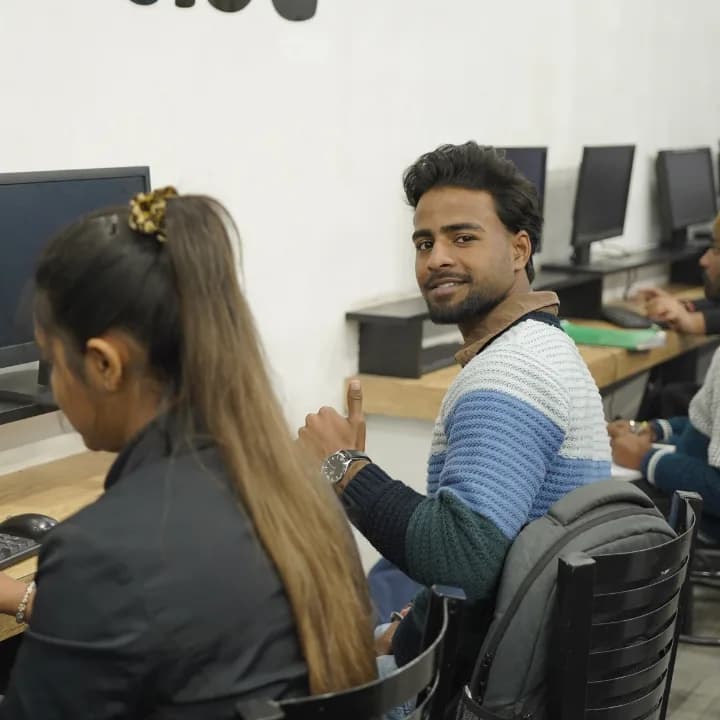
Send your question and a counsellor will call you back about batch timings, fees, EMI options, placement record, or whether this course fits your degree.
One call with a counsellor is usually enough to find out. Book a free demo class and see the lab before you decide.