

Personal Portfolio Website
A responsive portfolio site and landing page in semantic HTML5 and CSS3, versioned with Git and published from GitHub.
- HTML5
- CSS3
- Git
A structured six-month roadmap straight after school — from how the web works, through React, Node.js, Express and MongoDB, to an industry-level project, live deployment and placement preparation.
This is the complete MERN stack curriculum, written for someone starting straight after 12th with no coding background. Six months, one theme per month, and something you have built at the end of each.
Key Highlights
This is the complete MERN stack curriculum, written for someone starting straight after 12th with no coding background. Six months, one theme per month, and something you have built at the end of each. You begin with how the internet actually works — client–server architecture, HTTP and HTTPS, browsers, domains and hosting — then HTML5, CSS3 and Git, and finish month one with a personal portfolio website and a responsive landing page of your own. Month two is JavaScript from beginner to advanced: variables and data types, control flow and functions, arrays and objects, higher-order functions, closures, ES6+ and modules, DOM manipulation and form validation, asynchronous JavaScript with promises, async/await, the Fetch API and REST integration, and browser storage — built into a calculator, a weather app and a to-do app. Month three is React.js: components, JSX and Vite, hooks, React Router with nested and protected routes, API integration with Axios, state management with the Context API, styling with Tailwind CSS, and front-end JWT authentication, producing a blog site, an employee dashboard and an e-commerce front end. Month four is the back end — Node.js modules and npm, Express servers, routing, middleware and MVC architecture, REST APIs, bcrypt and JWT authentication with protected routes, MongoDB with query operators and aggregation basics, Mongoose schemas, models, validation and population, and file handling with Multer, Cloudinary and Nodemailer. Month five is one industry project taken from planning to review: project selection, requirement analysis, user stories, wireframing, folder structure, database design and API planning, then the dashboard, forms, routing and responsive UI, then the REST APIs, authentication, CRUD and file uploads behind them, then debugging, API testing, error handling, performance optimisation and security practice — with code reviews, bug fixes, documentation and a Git and GitHub workflow running throughout. Month six deploys it and gets you hired: the front end on Vercel and the back end on Render with MongoDB Atlas, environment variables, domains and hosting, then an ATS-friendly resume, a GitHub and LinkedIn profile, a portfolio website, technical interview preparation across the whole stack, aptitude, logical reasoning, HR preparation, live coding and structured mock interviews.
Every module ends in something you have built and a trainer has reviewed, so the list below is work you will have done rather than topics you will have heard about.
The syllabus is arranged so every module produces an asset rather than a set of notes. You will cover month 1 — web development fundamentals, month 2 — javascript (beginner to advanced), month 3 — react.js development, month 4 — backend development (node.js, express.js & mongodb), and finish with a live project built on HTML5 & CSS3, JavaScript (ES6+), React.js. Modules run in the order a real project runs: foundations first, then the core skills, then applied work under supervision, then the portfolio and interview preparation that turn all of it into an offer letter.
The working knowledge the job description actually lists.
Month 3 — React.js Development
A front end that talks to a real API, with routing, state and protected routes.
4 weeks · 24 sessions
Topics covered
The toolchain
Everything below is installed on the lab machines and used on live client work, not shown once in a slide and forgotten.
Any stream. Month one starts at how a web page is served and ends with your own portfolio website live on the internet, which is usually the point where it stops feeling abstract.
Most students run this next to a BCA, B.Sc IT or B.Com at a Phagwara college. Six months of evenings or weekends puts a deployed full-stack project on your CV a full year before campus placements begin.
You do not have to choose. This is a certificate programme with a fixed six-month end date, and the work it produces — a GitHub repository, a live URL, an industry project — is what a first employer actually inspects.
A gap or an unrelated background counts for less than work someone can open in a browser. The syllabus is identical whoever you are; only the batch timing changes.
The MERN stack is what most small business sites, dashboards and booking systems are built on. By month four you can build one properly rather than paying someone else to.
If free videos left you with notes and half-finished folders, what changes here is a trainer reviewing the code you wrote this week and ten mini projects with deadlines attached.
In this region the MERN stack is hired for not only by IT companies and agencies but by export houses, immigration consultancies, hospitals, schools and real estate firms building their own systems. That gap is the whole argument for this course: there is local demand, there are budgets, and there are very few trained people to hand the work to.
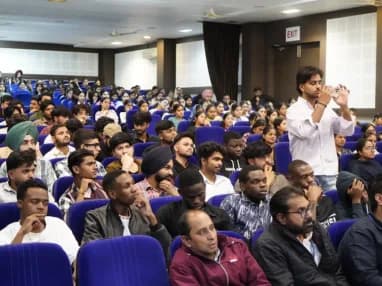
Build skills that hold up beyond the classroom.
What separates this from a playlist of tutorials is supervision on real work. From the second half of the course you build on live client projects with a trainer beside you, make decisions that have consequences, and correct them the following week. That loop is the skill. No employer in Phagwara will take your word for it without work they can inspect.
Be realistic about the money. A fresher who finishes with a working portfolio starts near the bottom of the band and moves quickly; someone who finishes with a certificate and nothing to show does not. The difference is entirely what you built.
The alternative is what most people try first: free videos, a cheap online course, six months of drifting, and knowledge you cannot demonstrate. A structured programme with live projects, a mentor who corrects you, an internship letter and a placement cell that actually calls employers is the difference between knowing the subject and being hired to do it.
Students reach the Phagwara centre from Banga, Nakodar, Kartarpur and the university belt, and the weekend batch exists so a job or a degree does not have to be paused to attend.
HTML, CSS, JavaScript, React, Node.js, Express and MongoDB taught as one connected stack rather than seven separate subjects.
A portfolio site, a calculator, a weather app, a to-do app, a blog, an employee dashboard, an e-commerce front end, an authentication system, a student management system and a library system — practice you can point at.
A full month on one complete, portfolio-ready application: planned, built, tested, optimised, reviewed and documented.
Design and consume RESTful services, then secure them with bcrypt, JWT, authorisation and protected routes — the two things every backend interview asks about.
Version control the way real teams use it, and a live deployment on Vercel, Render and MongoDB Atlas with environment variables and a domain.
An ATS-friendly resume, an optimised GitHub and LinkedIn profile, a portfolio website, technical question banks, live coding and structured mock interview sessions.
Complete the course with a portfolio of live projects and receive an industry-recognised certificate, plus a documented internship letter accepted by Punjab universities.
Recognised by employers across Punjab and beyond
Based on real client work, not a simulation
Live work you can show in any interview
CV review, mock interviews and hiring drives
Two certificates on completion — the course certificate and a separate capstone project certificate.
The roles this opens, what they pay in Punjab and beyond, and who is hiring for them — drawn from published job-market listings, not a brochure number.
The core destination of the programme — owning features across React, Express and MongoDB. Six months is what takes this from a trainee title to a developer one.
REST APIs, authentication and database design. Month four is this role’s foundation and month five is its proof.
Components, hooks, routing, state and styling. Often the easiest of these roles to enter first.
Building and maintaining business web applications — dashboards, portals and internal tools, which is what most local demand actually looks like.
Salary outlook — MERN Stack Developer
Builds and ships full-stack web applications. Two years of delivery experience usually doubles the starting figure, and developers who keep learning move well beyond it.
Indicative ranges compiled from public job-market listings. Actual offers vary by employer, skillset and interview performance.
A responsive portfolio site and landing page in semantic HTML5 and CSS3, versioned with Git and published from GitHub.
Three JavaScript builds covering DOM manipulation, events and form validation, then the Fetch API, promises and async/await against a real weather service, with state kept in browser storage.
Three React applications: components and hooks, React Router with protected routes, Axios CRUD against an API, Context API state and a Tailwind responsive UI with login and signup.
An authentication system with bcrypt and JWT, plus student and library management systems on Express and MongoDB with Mongoose schemas, validation, population and file uploads.
A complete full-stack MERN application taken from requirement analysis, user stories and wireframes through the dashboard, the REST APIs, testing, performance optimisation and security practice, with weekly code review.
The same project shipped: frontend on Vercel, backend on Render, MongoDB Atlas, environment variables and a domain — documented, pushed to GitHub and presented live. This is the one interviewers ask about.
Every project moves through the same loop: understand the brief, build with guidance, then explain the decisions behind your work.
Take a real requirement apart before touching a tool — what is being asked, what it needs, and which part to build first.
Personal Portfolio Website
Work hands-on with your trainer watching the screen, so a wrong turn is caught in the same session rather than three weeks later.
Calculator, Weather & To-Do Apps
Walk through what you built and why you built it that way. This is the interview rehearsal, run against every project rather than once at the end.
Blog, Dashboard & E-commerce Frontend
There are many places to learn this in Phagwara and the brochure syllabus looks similar at all of them. What differs is who teaches, whether you ever touch real work, and whether anyone picks up the phone after you have paid. techcadd has trained students across Punjab since 2007 on the same model: small batches, working practitioners as trainers, client projects as coursework.
Your trainer is not a full-time lecturer. They deliver client projects for techcadd’s services arm, so the examples in class are current rather than a case study from five years ago.
Month one begins at how the internet works. Nothing is assumed, and nothing is skipped on the assumption that you will pick it up later.
Ten named mini projects across the first four months, then a full month on one industry project. You are never more than four weeks from a finished piece of work.
Month six deploys the front end to Vercel and the back end on Render with MongoDB Atlas, on a real domain — because a project an interviewer cannot open has not been finished.
You leave with a course completion certificate, a documented internship on live work, a GitHub repository and a portfolio website — four different pieces of evidence, not one.
ATS resume reviews, LinkedIn and GitHub profile guidance, technical and HR mock interviews, live coding practice, and repeated drives with hiring partners across Phagwara, Jalandhar and Ludhiana.
Find answers to the questions students ask before enrolling.
Six months, running as a fixed roadmap: web development fundamentals, JavaScript, React.js, backend development with Node.js, Express and MongoDB, an industry project, then deployment and placement preparation. Weekday, evening and weekend batches cover the same syllabus, and 1-on-1 training is available. Every class runs for 2 hours.

Send your question and a counsellor will call you back about batch timings, fees, EMI options, placement record, or whether this course fits your degree.
One call with a counsellor is usually enough to find out. Book a free demo class and see the lab before you decide.