

GitHub Team Workflow
A public repo with ten reviewed pull requests, a documented branching strategy and a passing CI Action.
- Git
- GitHub Actions
A complete 9-month Flutter course that takes you from your first line of Dart to building intelligent, deployed, team-built products — covering generative AI, agentic features, a real backend, an automated release pipeline and the client skills to sell it.
This 9-month program covers the complete Flutter journey from scratch. Students begin with Dart basics and progress through proper Git and GitHub team workflows with CI, generative AI APIs with streaming and retrieval-augmented generation, agentic and multimodal features, a real Supabase backend with row-level security, release-pipeline engineering with Fastlane and crash reporting, monetisation and product analytics, and a capstone project taken from a client brief through to store submission.
Key Highlights
This 9-month program covers the complete Flutter journey from scratch. Students begin with Dart basics and progress through proper Git and GitHub team workflows with CI, generative AI APIs with streaming and retrieval-augmented generation, agentic and multimodal features, a real Supabase backend with row-level security, release-pipeline engineering with Fastlane and crash reporting, monetisation and product analytics, and a capstone project taken from a client brief through to store submission. The structure divides into three phases: months one through three focus on foundations (Dart, Flutter widgets, layouts, navigation); months four through six develop professional skills (state management, APIs, Firebase, animations); months seven through nine address advanced topics (Git workflows, generative AI, Supabase, release pipelines, monetisation and the capstone). Each month builds progressively on prior knowledge.
Every module ends in something you have built and a trainer has reviewed, so the list below is work you will have done rather than topics you will have heard about.
GitHub Actions and Fastlane shipping signed builds with crash reporting
The syllabus is arranged so every module produces an asset rather than a set of notes. You will cover month 1 — dart fundamentals & dev setup, month 2 — flutter widgets & layouts, month 3 — navigation, theming & local storage, month 4 — state management & architecture, and finish with a live project built on Flutter SDK & Dart, VS Code / Android Studio, GoRouter, SharedPreferences & Hive. Modules run in the order a real project runs: foundations first, then the core skills, then applied work under supervision, then the portfolio and interview preparation that turn all of it into an offer letter.
The working knowledge the job description actually lists.
Month 3 — Navigation, Theming & Local Storage
A themed, multi-page app that remembers what you did last time.
4 weeks · 24 sessions
Month 4 — State Management & Architecture
Where junior Flutter code collapses, and how to structure so it does not.
4 weeks · 24 sessions
Month 5 — REST APIs, Networking & Firebase
Live data and a real backend behind the interface.
4 weeks · 24 sessions
Topics covered
The toolchain
Everything below is installed on the lab machines and used on live client work, not shown once in a slide and forgotten.
Join from any stream. Nine months of consistent work is the difference between a junior app job and one that carries technical ownership, and there is no prerequisite beyond 12th pass.
If you are finishing a BCA, B.Sc or B.Tech, this is the version that puts you in senior interviews rather than fresher drives. You arrive with an AI app, a real backend, a release pipeline and a revenue dashboard.
If you already ship apps, this is the course that changes your rate. Generative AI, a Supabase backend, an automated pipeline and a priced client proposal are what let you quote for a whole system rather than a screen.
The final month covers the business side: writing a technical proposal from a brief, estimating timelines, pricing a Flutter build, running demo cadence and handling change requests.
A screen that shows data is a form; a product is something that learns, responds and gets a job done — and the developers who can build the model behind the surface and the pipeline around it are the ones who set their own rate. That gap is the whole argument for this course: there is local demand, there are budgets, and there are very few trained people to hand the work to.
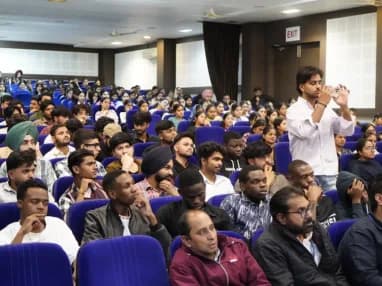
Build skills that hold up beyond the classroom.
What separates this from a playlist of tutorials is supervision on real work. From the second half of the course you build on live client projects with a trainer beside you, make decisions that have consequences, and correct them the following week. That loop is the skill. No employer in Phagwara will take your word for it without work they can inspect.
Be realistic about the money. A fresher who finishes with a working portfolio starts near the bottom of the band and moves quickly; someone who finishes with a certificate and nothing to show does not. The difference is entirely what you built.
The alternative is what most people try first: free videos, a cheap online course, six months of drifting, and knowledge you cannot demonstrate. A structured programme with live projects, a mentor who corrects you, an internship letter and a placement cell that actually calls employers is the difference between knowing the subject and being hired to do it.
Students reach the Phagwara centre from Banga, Nakodar, Kartarpur and the university belt, and the weekend batch exists so a job or a degree does not have to be paused to attend.
Ten merged pull requests with review comments, a documented branching strategy, protected main and a passing CI Action. A candidate who cannot resolve a conflict live fails technical screens regardless of how good the app is.
You will ship streaming responses, a RAG pipeline over a custom document set, keys kept outside the client bundle, rate limiting and fallback UX — plus a documented cost-per-query estimate.
Supabase Postgres with row-level security, Auth, Edge Functions and a documented dev/staging/production split. Firebase-only teams hit a ceiling on complex queries and cost; this is where you pass it.
A live RevenueCat paywall with a real product and an analytics dashboard tracking the install-to-purchase funnel. An app that cannot report retention and revenue cannot be pitched to a client or an investor.
Complete the course with a portfolio of live projects and receive an industry-recognised certificate, plus a documented internship letter accepted by Punjab universities.
Recognised by employers across Punjab and beyond
Based on real client work, not a simulation
Live work you can show in any interview
CV review, mock interviews and hiring drives
Two certificates on completion — the course certificate and a separate capstone project certificate.
The roles this opens, what they pay in Punjab and beyond, and who is hiring for them — drawn from published job-market listings, not a brochure number.
Mid level, and the role this course prepares you for. Interviews test whether you can wire a real model into a real app safely, with a fallback for when it fails. Show the generative AI app, the agentic feature and the documented failure-mode test.
Senior. Interviews test system design across state, backend and release pipeline, and whether you can defend technical decisions. Show the Supabase backend, the automated release pipeline and the architecture decision records.
The role that owns the app and the service behind it. Supabase schema design, row-level security, Edge Functions and a documented environment split are exactly what this interview asks about.
Independent. Clients test whether you can scope, price, build and ship an app end to end. Show the client kit: proposal, published app, case study and GitHub history.
Salary outlook — AI Mobile Engineer
Ships intelligent, monetised products with a real backend and an automated pipeline. Freelance rates depend on the client kit — proposal, published app and case study.
Indicative ranges compiled from public job-market listings. Actual offers vary by employer, skillset and interview performance.
A public repo with ten reviewed pull requests, a documented branching strategy and a passing CI Action.
Streaming AI chat plus a RAG-based question-and-answer feature over custom documents, with a cost-per-query estimate.
A confirmed, tool-calling agent action inside a live app — scan a receipt, log the expense — with a documented failure-mode test.
A live app on a real backend with row-level security policies and a deployed Edge Function, across separated dev, staging and production environments.
A CI/CD pipeline shipping signed builds to both stores’ test tracks, with a crash dashboard receiving real events.
A live RevenueCat paywall with a real product and a funnel analytics dashboard — then the capstone taken from a client brief through to a published app with a written proposal and a case study.
Every project moves through the same loop: understand the brief, build with guidance, then explain the decisions behind your work.
Take a real requirement apart before touching a tool — what is being asked, what it needs, and which part to build first.
GitHub Team Workflow
Work hands-on with your trainer watching the screen, so a wrong turn is caught in the same session rather than three weeks later.
Generative AI App
Walk through what you built and why you built it that way. This is the interview rehearsal, run against every project rather than once at the end.
Agentic AI Feature
There are many places to learn this in Phagwara and the brochure syllabus looks similar at all of them. What differs is who teaches, whether you ever touch real work, and whether anyone picks up the phone after you have paid. techcadd has trained students across Punjab since 2007 on the same model: small batches, working practitioners as trainers, client projects as coursework.
You advance when a deliverable passes review. Over nine months that matters — nobody reaches the capstone without the earlier projects actually passing.
Live OpenAI, Claude and Gemini keys with per-student budgets, a Supabase project, RevenueCat products and both store consoles — so the cost-per-query figure is measured, not estimated.
The people teaching Supabase RLS and Fastlane pipelines are the people writing them for client work, which is why the failure sections cover failures that actually happen.
Nine months, one continuous sequence. This is the full programme from beginner to advanced — not a partial track that assumes you will come back for the rest.
Find answers to the questions students ask before enrolling.
Nine months of training. Weekday, evening and weekend batches cover the same syllabus, and 1-on-1 training is available if you would rather set your own pace. Every class runs for 2 hours, whichever format you choose.

Send your question and a counsellor will call you back about batch timings, fees, EMI options, placement record, or whether this course fits your degree.
One call with a counsellor is usually enough to find out. Book a free demo class and see the lab before you decide.