
SEO Foundations Site Review
Review a live website against SEO basics — indexing, titles, headings and content — and write up what you find.
- Google Search
- Search Console
Learn how Google finds, understands and ranks websites — keyword research, on-page, technical, local and off-page SEO, Search Console, GA4 and AI search, practised on live websites with trainer guidance.

Admissions open
Free demo class & counselling
Session slots
techcadd’s SEO Course in Phagwara is a practical programme for students, graduates, job seekers, working professionals, business owners and aspiring freelancers who want to understand how organic search actually works. It starts with how search engines crawl, index and rank pages, then moves through keyword research and search intent, on-page optimisation, content planning, technical SEO, local SEO and Google Business Profile, ethical link building, and measurement with Google Search Console and GA4. You also learn how AI tools and AI-generated search results are changing the way content is researched, written and discovered. The training is hands-on throughout. Rather than memorising ranking factors, you audit real websites, research keywords for real businesses, write and optimise pages, fix technical issues and report what changed. Nobody can honestly promise a number-one ranking, and this course does not — what it teaches is the process professionals use to earn visibility over time, and how to explain that process clearly to an employer or a client.

The syllabus is arranged so every module produces an asset rather than a set of notes. You will cover how search engines work & seo foundations, keyword research & search intent, on-page seo & content optimisation, technical seo fundamentals, and finish with a live project built on Google Search Console, Google Analytics 4 (GA4), Google Keyword Planner. Modules run in the order a real project runs: foundations first, then the core skills, then applied work under supervision, then the portfolio and interview preparation that turn all of it into an offer letter.
The working knowledge the job description actually lists.
On-Page SEO & Content Optimisation
Making each page clear to search engines and useful to readers.
2 weeks · 8 sessions
Technical SEO Fundamentals
The problems that quietly cap a website’s ceiling.
2 weeks · 8 sessions
Local SEO & Google Business Profile
Helping local businesses appear when nearby customers search.
1 week · 5 sessions
Topics covered
The SEO course runs as three nested levels. Each one builds on the last, so you can start at the foundation and continue later without repeating anything.
Understand how search works and learn the core skills — keyword research, on-page optimisation, technical SEO basics and local SEO — practised on real websites.
What it covers
Skills & tools
Recommended for
SEO Trainee, Digital Marketing Intern, Content Writer and small business owners managing their own website.
Everything in the Foundation track, plus advanced technical SEO, link building, AI search, analytics and an end-to-end capstone project for your portfolio.
What it covers
Skills & tools
Recommended for
SEO Executive, SEO Analyst, Local SEO Specialist, Content Strategist and freelance SEO pathways.
How search engines work
Keyword research & search intent
Keyword clustering & page mapping
On-page SEO
Content optimisation
Sitemaps & robots.txt
Indexing fixes in Search Console
Google Business Profile
Local citations
Core Web Vitals & site speed
Schema markup
Full technical audits
Backlink analysis
Ethical link building & outreach
AI search & AI tools
Topic clusters & content strategy
GA4 organic reporting
Looker Studio reports
End-to-end SEO capstone
The tracks are nested, not parallel. The 2-month Foundation track covers how search works, keyword research, on-page SEO, technical basics and local SEO. The 4-month Professional track includes all of that and continues into advanced technical SEO, link building, AI search, analytics and a full capstone project — so moving to the longer track never means starting again.
Review a live website against SEO basics — indexing, titles, headings and content — and write up what you find.
Research keywords for a real business, group them by intent and map each cluster to an existing or new page.
Rewrite titles, meta descriptions, headings, internal links and content on a set of pages, documenting every change and the reason for it.
Plan a pillar page and supporting articles from keyword data, with a clear internal-linking structure.
Optimise a Google Business Profile, audit local citations and plan location content for a local business.
Crawl a live site, identify speed, indexing, redirect and schema issues, then prioritise fixes by impact and effort.
Compare a site’s backlink profile with its competitors and plan ethical outreach and digital PR opportunities.
A complete SEO strategy for one website — research, on-page, technical, local and off-page work — with a Search Console and GA4 report on what changed.
The working loop
Every project moves through the same loop: understand the brief, build with guidance, then explain the decisions behind your work.
Study the business, its customers and competitors, research keywords by intent and audit the current state of the website.
Keyword Plan & SEO Audit
Fix technical issues, improve on-page content, optimise local listings and build authority ethically — with trainer guidance on every decision.
On-Page, Technical & Local SEO Work
Track impressions, clicks, rankings and enquiries in Search Console and GA4, and present what changed, what did not and what comes next — the way you would to a client.
SEO Performance Report & Case Study
There are many places to learn this in Phagwara and the brochure syllabus looks similar at all of them. What differs is who teaches, whether you ever touch real work, and whether anyone picks up the phone after you have paid. techcadd has trained students across Punjab since 2016 on the same model: small batches, working practitioners as trainers, client projects as coursework.
Every module ends in real work on a live website — a keyword plan, an optimised page, an audit or a report — rather than a quiz.
On-page, technical, local and off-page SEO, analytics and AI search are taught as one connected process, not as isolated topics.
A focused batch means you can ask questions, discuss a site’s problems and get guidance while you work through practical tasks.
Eight projects — from a keyword plan to a full technical audit and capstone — give you concrete work to present in interviews or to clients.
CV improvement, interview preparation and advice on presenting your SEO projects, with a realistic view of roles in SEO and digital marketing.
SEO compounds: the work done on a site in month three can still be bringing the business enquiries in year two, which is why businesses in and around Phagwara keep paying for it on a monthly retainer rather than as a one-off.
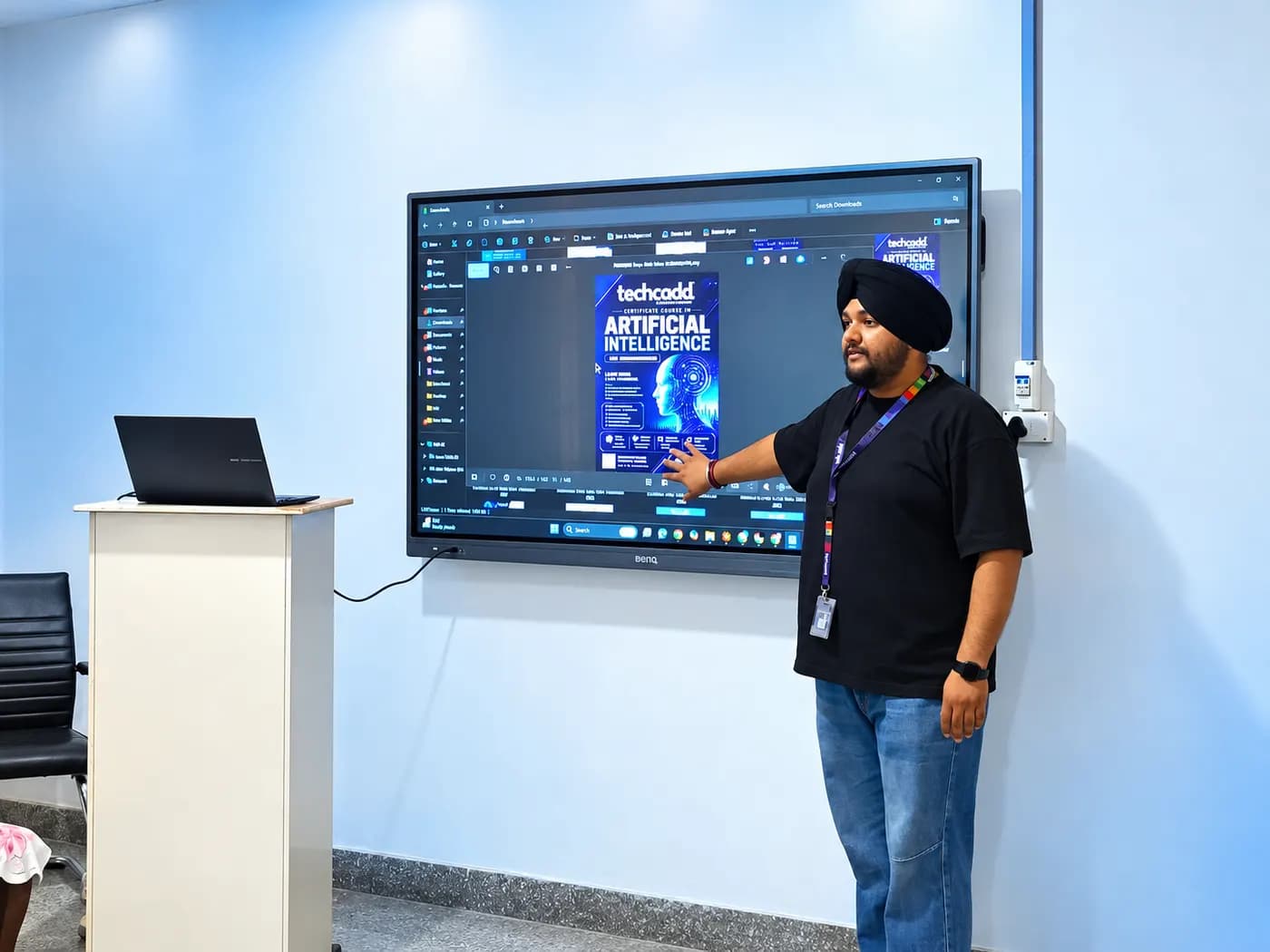
Build skills that hold up beyond the classroom.
What separates this from a playlist of tutorials is supervision on real work. From the second half of the course you build on live client projects with a trainer beside you, make decisions that have consequences, and correct them the following week. That loop is the skill. No employer in Phagwara will take your word for it without work they can inspect.
Be realistic about the money. A fresher who finishes with a working portfolio starts near the bottom of the band and moves quickly; someone who finishes with a certificate and nothing to show does not. The difference is entirely what you built.
The alternative is what most people try first: free videos, a cheap online course, six months of drifting, and knowledge you cannot demonstrate. A structured programme with live projects, a mentor who corrects you, an internship letter and a placement cell that actually calls employers is the difference between knowing the subject and being hired to do it.
Students reach the Phagwara centre from Banga, Nakodar, Kartarpur and the university belt, and the weekend batch exists so a job or a degree does not have to be paused to attend.
Crawling, indexing, ranking signals and search intent are taught first, so every later technique makes sense instead of being a checklist you follow blindly.
Find the terms real customers type, group them into clusters, judge difficulty and match each one to the right page — not just chase the biggest search volume.
Titles, meta descriptions, headings, internal links, images, content briefs and E-E-A-T principles, practised on real pages rather than explained on slides.
Site speed, Core Web Vitals, mobile usability, sitemaps, robots.txt, canonicals, redirects and schema markup — the problems that quietly hold a website back.
Google Business Profile, local citations, reviews and location pages — the work that helps a local shop, clinic, institute or service business appear when nearby customers search.
Google Search Console, GA4 and rank tracking show what changed and why. You learn to report impressions, clicks and enquiries truthfully, including the months where progress is slow.
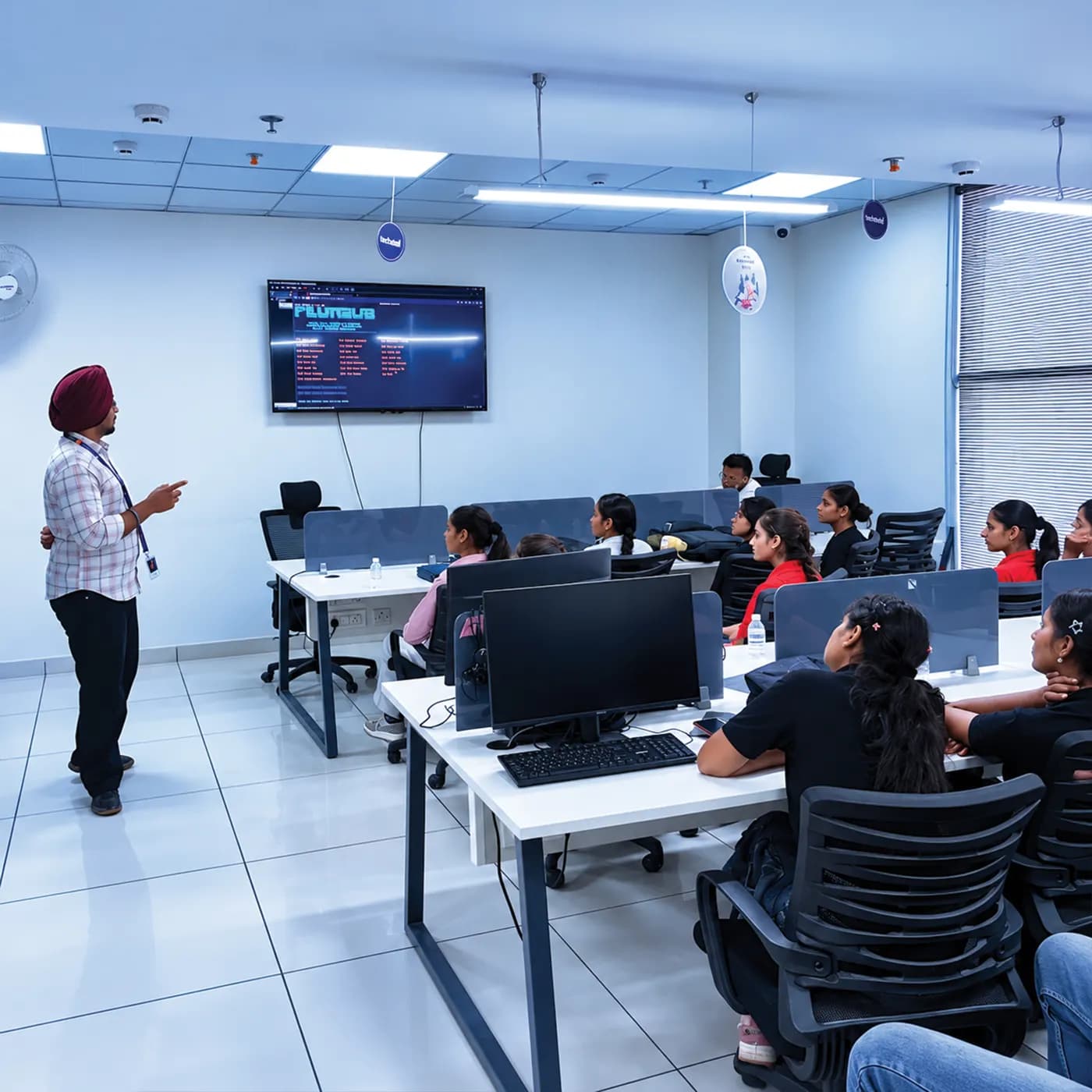
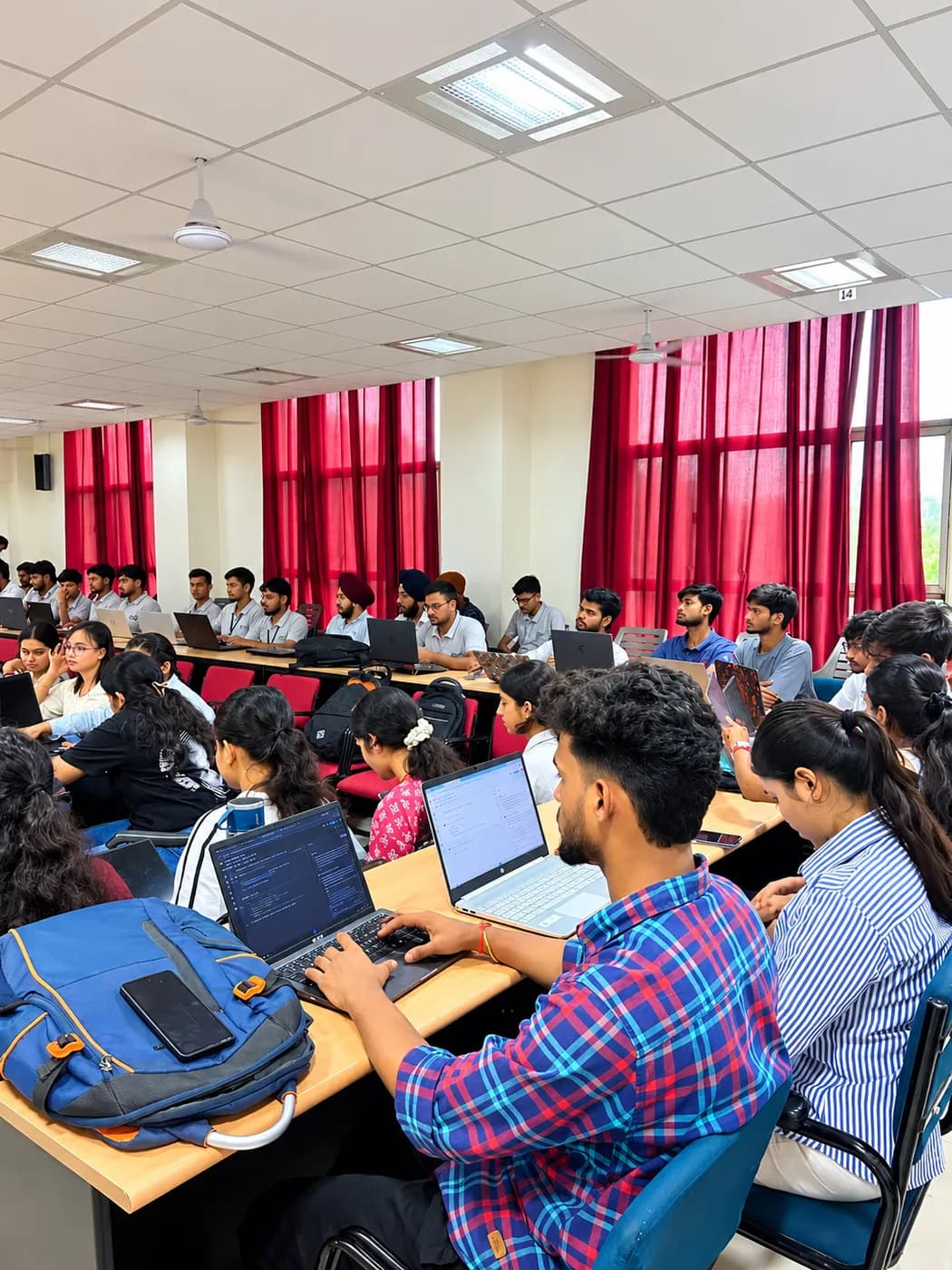
The SEO course is built for people at six different starting points, and the batch is deliberately mixed. What matters far more than your background is turning up consistently and finishing what each module asks you to build.
You do not need a technical background to learn SEO. A structured course starts with how Google works and builds up to keyword research, on-page optimisation and reporting — a practical skill to build before or alongside college.
Whether you study commerce, arts, management, computer science or media, SEO adds a measurable digital skill to your degree — one that agencies, e-commerce brands and content teams actively look for.
SEO Executive and SEO Analyst roles are common entry points into digital marketing. A portfolio of audits, keyword plans and optimised pages says far more in an interview than a list of tool names.
Content writers, web designers, marketers and sales professionals all work better when they understand search. Learn how pages get found so your existing work reaches more of the right people.
Understand what your website and Google Business Profile need to appear in local searches, and learn enough to judge whether an agency’s SEO report actually reflects progress.
Site audits, keyword research, on-page optimisation, local SEO and monthly reporting are all services clients pay for — and SEO work tends to be retained month after month rather than billed once.
The toolchain behind the craft
Everything below is installed on the lab machines and used on live client work, not shown once in a slide and forgotten.
Complete the course with a portfolio of live projects and receive an industry-recognised certificate, plus a documented internship letter accepted by Punjab universities.
Recognised by employers across Punjab and beyond
Based on real client work, not a simulation
Live work you can show in any interview
CV review, mock interviews and hiring drives
Two certificates on completion — the course certificate and a separate capstone project certificate.
The roles this opens, what they pay in Punjab and beyond, and who is hiring for them — drawn from published job-market listings on one comparable scale, not a brochure number.
Salary outlook
Earns a business its search traffic instead of buying it.
Punjab / Tricity
Delhi NCR
Remote / Freelance
Indicative ranges for SEO Executive roles, compiled from public job-market listings and drawn on the same scale in every market. Actual offers vary by employer, skillset and interview performance — Punjab pay typically reaches 2× the fresher ceiling within two years of delivery experience.
Talk about your target roleSEO Executive, SEO Analyst, Local SEO Specialist, Content Strategist, Digital Marketing Executive and Freelance SEO Consultant. Employers look for evidence that you can research, optimise and report — which is why the portfolio matters more than the certificate.
A fresher with a working portfolio starts around ₹15,000 – ₹28,000 a month in the Punjab market. With two years of delivery experience that can rise to roughly ₹4.5–9 LPA, depending on your skills, results, employer and location.
Yes. SEO is delivered online, so a Phagwara address is no barrier to remote clients. The course covers audits, proposals and monthly reporting so you can scope, price and explain your work — though freelance income usually builds gradually as you gather results to show.
Digital marketing agencies, e-commerce and retail brands, publishers and content teams, plus schools, hospitals, immigration consultancies, hotels and local service businesses that want to be found on Google.
Yes. SEO stacks well with Google Ads, WordPress, content writing and full digital marketing. The tools and concepts overlap, so the next course builds on what you already know.
Choosing a SEO course should be about more than a certificate. If the goal is a career, the things worth comparing are the coding practice, the projects, the trainer support and the skills you can actually apply.
SEO curriculum
techcadd
On-page, technical, local, off-page, analytics and AI search
Commonly offered
Often focused mainly on on-page basics
Learning style
techcadd
Hands-on work on live websites
Commonly offered
Can be more theory-oriented
Keyword research
techcadd
Intent-based research, clustering and page mapping
Commonly offered
Keyword lists without intent analysis
Technical SEO
techcadd
Audits, Core Web Vitals, schema and indexing fixes
Commonly offered
Technical depth can vary
Local SEO
techcadd
Google Business Profile and local citations for real businesses
Commonly offered
May receive limited attention
Link building
techcadd
Ethical outreach and competitor backlink analysis
Commonly offered
Approach to link building can vary
Analytics & reporting
techcadd
Search Console, GA4 and Looker Studio reports
Commonly offered
Reporting may be covered briefly
Portfolio building
techcadd
Eight practical projects including a capstone
Commonly offered
Portfolio development may receive less focus
Doubt support
techcadd
Trainer guidance throughout the course
Commonly offered
Support may be limited to scheduled sessions
Career support
techcadd
CV guidance, mock interviews and portfolio preparation
Commonly offered
Career assistance can vary significantly
The right-hand column represents common market patterns, not a claim about any specific institute. Before choosing an SEO Course in Phagwara, ask what you will actually practise, whether you will work on live websites, how technical and local SEO are taught, and what career support is included.
What made it click for me was the lab time. You can sit after class and someone will still explain it until you get it.
I travelled in for the weekend batch and it was worth every trip. Small batch, real work, no time wasted on theory nobody uses.
The course got me interview-ready faster than I expected. My interviewer asked to see my project and that was the whole conversation.
I was switching careers and worried I would be behind. Half the batch was doing the same thing, and nobody made it awkward.
I joined with almost no background and finished with a project I could actually show. The trainer never rushed the basics.
techcadd’s placement cell kept calling me for drives until I was placed. That persistence mattered more than anything else.
It is a practical course at techcadd that teaches how websites earn visibility on Google — keyword research, on-page SEO, technical SEO, local SEO, link building, AI search and reporting with Search Console and GA4 — practised on real websites.

Send your question and a counsellor will call you back about batch timings, fees, EMI options, placement record, or whether this course fits your degree.
One call with a counsellor is usually enough to find out. Book a free demo class and see the lab before you decide.