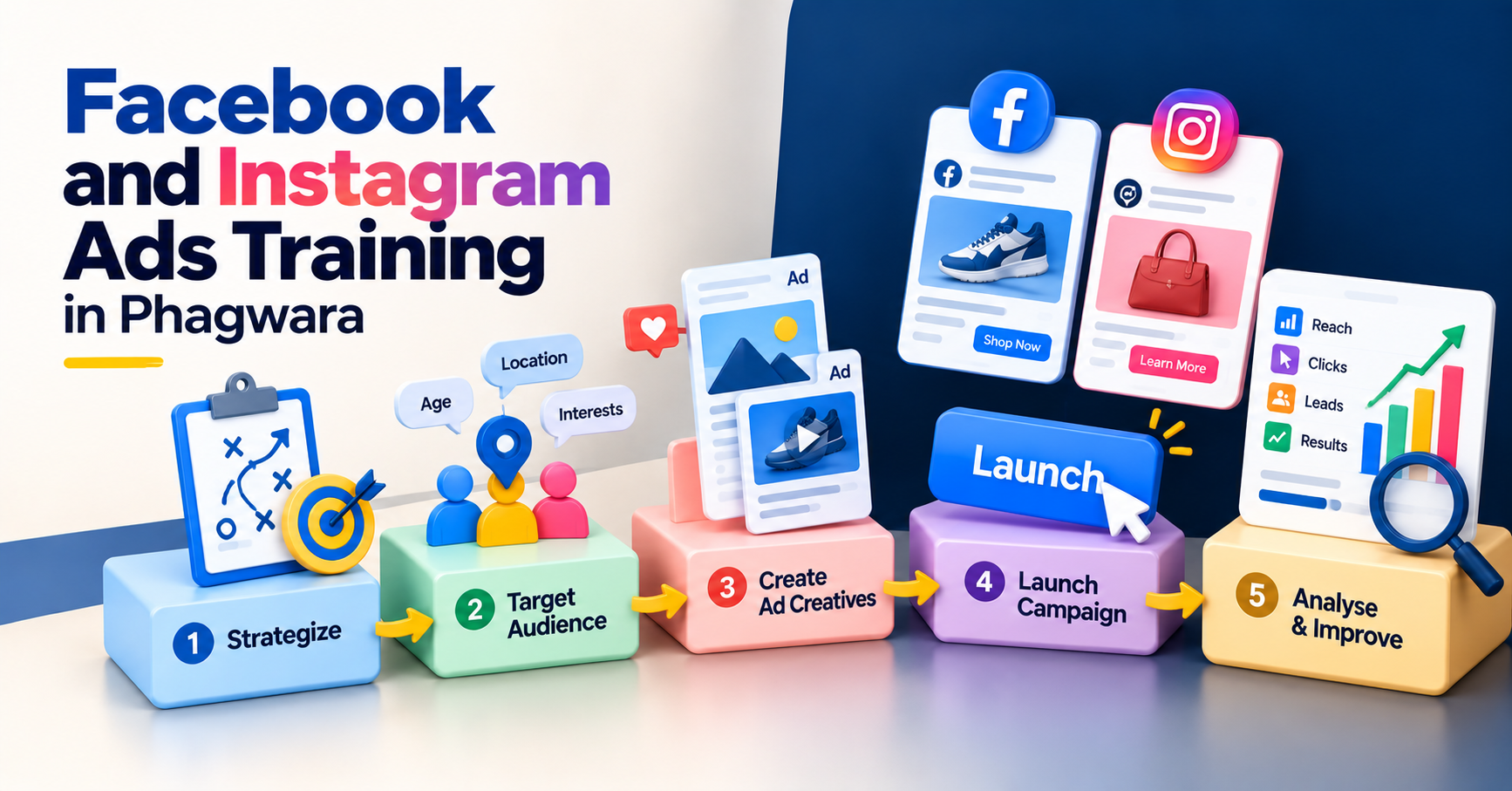
Facebook and Instagram Ads Training in Phagwara
Explore Facebook and Instagram Ads Training in Phagwara at Techcadd. Learn campaign planning, audience targeting, ad creatives, lead generation and reporting.
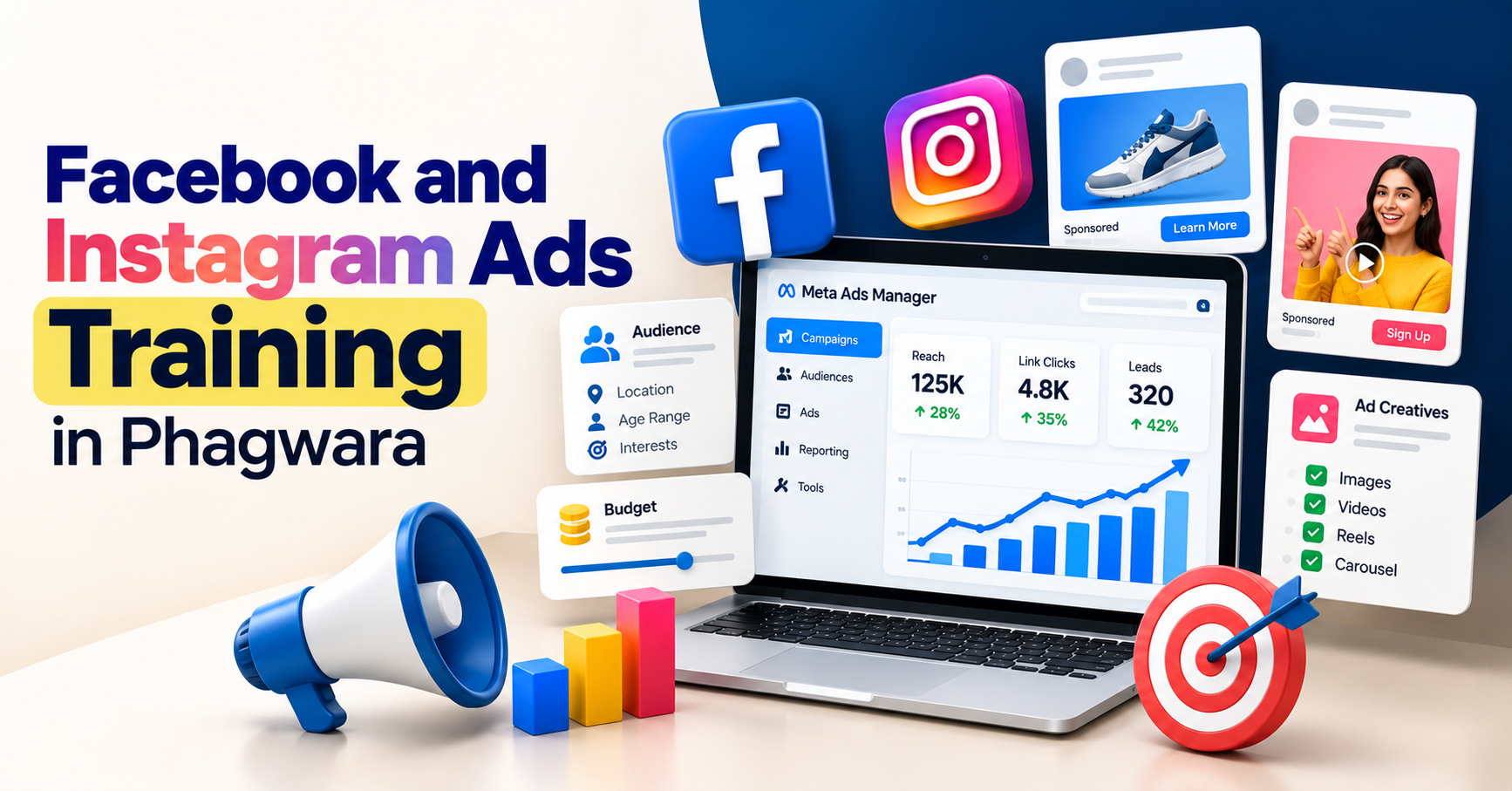
Facebook and Instagram Ads Training in Phagwara
Social media advertising has become an important way for businesses to introduce their products, reach potential customers, promote services, and generate enquiries online. From a local training institute promoting admissions to a retail store announcing a new collection, paid campaigns on Facebook and Instagram can help businesses reach audiences beyond their existing followers.
However, running an advertisement involves much more than selecting an image and pressing the Boost button. Advertisers need to understand campaign objectives, audience selection, creative formats, budget allocation, tracking, and performance analysis. Without a clear strategy, even an attractive advertisement may struggle to achieve its intended goal.
Facebook and Instagram Ads Training in Phagwara at Techcadd is a relevant learning option for people who want to explore paid social media advertising and understand how campaigns are planned, launched, monitored, and improved.
What Are Facebook and Instagram Ads?
Facebook and Instagram advertising allows businesses to promote content to selected audiences through Meta’s advertising platform. Depending on the campaign setup and available placements, advertisers can display image ads, video ads, carousel ads, Stories, Reels, and other supported formats.
These advertisements can serve different purposes. A business may want more people to discover its brand, visit a website, send a message, submit a lead form, or complete a purchase. The campaign setup should reflect that goal.
For example, a local computer training institute may promote a course through a short video, reach people within its service area, and encourage interested learners to enquire about fees and schedules. A clothing business may use carousel ads to showcase products, while an online store may focus on website visits and purchases.
Understanding the difference between an advertising format, campaign objective, and business goal is an important starting point for anyone learning paid social media marketing.
Why Learn Facebook and Instagram Advertising?
Organic social media content and paid advertising serve related but different purposes. Organic posts help maintain a brand's social presence and communicate with its existing audience. Paid campaigns provide additional ways to distribute content to selected audiences, subject to platform settings, delivery, competition, and budget.
Learning advertising can help students and aspiring digital marketers understand how businesses plan promotional campaigns and evaluate their results.
It can also be useful for business owners who want to understand the process behind paid promotions before managing campaigns themselves or working with an agency.
Practical learning is particularly valuable because advertising platforms change over time. Learners should develop a strong understanding of campaign principles and learn how to navigate the current interface rather than relying only on memorised button locations.
1. Campaign Objectives and Advertising Strategy
Every advertising campaign should begin with a clear objective. Before creating an ad, marketers need to decide what they want the audience to do and how that action supports the business.
Common campaign goals include brand awareness, website visits, messages, lead generation, and sales. The objectives and optimisation options available depend on Meta's current campaign setup.
A practical exercise can involve comparing two businesses with different needs. A new local business may want people to become familiar with its name, while a training institute may want qualified enquiries about a particular course. Their messaging, audience, creative, and measurement approach should differ.
Learners can practise writing a campaign brief that identifies the business goal, intended audience, offer, creative format, call to action, budget, and success metrics.
Skill developed: Connecting advertising objectives with specific business needs.
2. Audience Targeting and Customer Research
Reaching the right audience is an important part of campaign planning. Advertisers need to understand whom they want to reach, what those people may be interested in, and which locations the business can realistically serve.
For a local business in Phagwara, an audience strategy might begin with the surrounding service area. A campaign for an online business serving customers across India would require a different approach.
Learners can explore location settings, age ranges where appropriate, audience suggestions, custom audiences, and other targeting options available for the campaign. They can also learn why excessive narrowing is not always beneficial and why targeting choices should reflect the offer and available data.
Customer research matters just as much as the settings themselves. An advertisement aimed at college students may need different language and creative from one aimed at working professionals or business owners.
Skill developed: Defining an appropriate audience and aligning the campaign message with that audience.
3. Creating Ad Copy and Scroll-Stopping Creatives
An advertisement competes with many other posts and videos for attention. Its creative needs to communicate the main message quickly, while its copy should explain the offer and make the next step clear.
Training exercises can involve developing different headlines, primary text, calls to action, and creative concepts for the same offer. Learners can compare a product-focused message with one that addresses a customer problem or highlights a useful benefit.
For example, a course advertisement might communicate the subject being taught, the intended learner, and how to enquire about the course. It should avoid unsupported claims about guaranteed employment, income, or results.
Image ads, short videos, Reels, and carousel formats each offer different creative possibilities. The right choice depends on the message, audience, campaign goal, and available assets.
Skill developed: Writing concise ad copy and planning creatives that communicate an offer clearly.
4. Understanding Meta Ads Manager
Meta Ads Manager is the main workspace used to create and manage many Facebook and Instagram advertising campaigns. It provides tools for configuring campaigns, selecting audiences and placements, setting budgets, reviewing delivery, and analysing results.
A learner can practise understanding the three main levels of campaign structure:
Campaign: Defines the main advertising objective.
Ad set: Contains settings such as audience, placements, schedule, budget configuration, and optimisation.
Ad: Contains the creative, copy, destination, and other advertisement details.
Understanding this structure helps learners organise campaigns instead of treating every advertisement as an isolated post.
Practical exercises may include preparing a draft campaign, reviewing settings before publication, checking whether the destination works correctly, and understanding how to edit or pause an advertisement when needed. Live campaigns should only be published with appropriate authorisation and budget approval.
Skill developed: Navigating campaign structure and understanding the purpose of key advertising settings.
5. Budget Planning and Campaign Scheduling
Advertising budgets should be planned according to the business objective, testing needs, campaign duration, and available resources. A larger budget does not automatically guarantee better results, and a very small budget may limit the amount of useful performance data available.
Learners can practise building a basic budget plan, dividing spending between campaign tests, and estimating how much can be spent over a selected period. They can also explore daily and lifetime budgets, campaign schedules, and the difference between budget allocation and actual spend.
For example, a business may want to test two creative concepts before deciding which one deserves further investment. The exercise can focus on setting a clear testing plan and determining which metrics will inform the next decision.
Learners should also understand that taxes, billing arrangements, delivery fluctuations, and platform settings can affect the amount charged or the way spend is reported.
Skill developed: Planning advertising spend, understanding budget settings, and monitoring expenditure.
6. Lead Generation for Local Businesses
Lead generation campaigns aim to encourage potential customers to take an action that expresses interest in a product or service. Depending on the setup, this might involve submitting an instant form, sending a message, or completing a form on a website.
A useful training exercise is to plan a campaign for a local business. Learners can identify the offer, prepare the ad creative, choose an appropriate lead destination, and outline the information needed to qualify an enquiry.
For example, an educational institute may want to know which course a prospective learner is interested in and how to contact them. The form should request only relevant information and explain how it will be used.
Generating leads is only one part of the process. Businesses also need a clear follow-up procedure, timely responses, accurate information, and a way to assess lead quality. A high number of enquiries does not necessarily mean that every enquiry is suitable or likely to convert.
Skill developed: Planning lead campaigns and understanding how advertising connects with enquiry management.
7. Testing Different Ad Creatives
A campaign's first creative is not necessarily its best-performing option. Testing helps marketers compare ideas and learn which messages or formats appear more effective for a particular audience and objective.
A simple exercise might compare two different headlines, two video openings, or two creative concepts while keeping other important settings as consistent as possible. Learners can define the hypothesis before starting the test and choose a suitable metric for evaluating it.
For instance, a campaign focused on video views may be evaluated differently from one designed to generate enquiries. Comparing advertisements without considering their objectives can lead to misleading conclusions.
Results should be interpreted carefully. Small samples, delivery differences, seasonality, and audience behaviour can affect the outcome. A test provides evidence for a decision, not a universal rule about what will work for every future campaign.
Skill developed: Developing test ideas, comparing campaign variations, and making informed creative decisions.
8. Reading Campaign Performance Reports
Campaign reporting helps advertisers understand how their spending and creative are performing. Meta Ads Manager offers metrics that may include reach, impressions, clicks, click-through rate, cost per result, and other measures relevant to the campaign.
For a lead generation campaign, marketers may examine the number and cost of leads, then compare those figures with the quality of the enquiries. For a traffic campaign, they may look at link clicks and relevant website activity. For an awareness campaign, reach and impressions may be useful alongside other objective-specific measures.
Learners can practise reviewing a sample report, identifying changes, and explaining what the available data does and does not show. They can also prepare a simple summary that includes campaign objective, spend, results, observations, and recommended next steps.
It is important to distinguish between platform-reported results and actual business outcomes. A lead recorded by an advertising platform is not automatically a confirmed admission or sale.
Skill developed: Interpreting advertising metrics and communicating campaign performance clearly.
9. Tracking Conversions and Understanding Results
When the objective involves website actions, purchases, or other conversions, accurate tracking helps marketers evaluate what happens after someone interacts with an advertisement.
Depending on the campaign, website setup, and available integrations, tracking may involve Meta Pixel, the Conversions API, analytics tools, or event tracking. Learners should understand what these tools are designed to measure and why correct implementation matters.
A practical exercise can involve mapping the customer journey from ad click to landing page to enquiry submission. Learners can identify where measurement may be needed and understand why tracking must be tested rather than assumed to be working.
Privacy requirements, consent, platform policies, and applicable laws should be considered when collecting and processing customer information.
Skill developed: Understanding the customer journey and the role of conversion tracking in campaign evaluation.
10. Optimising Campaigns After Launch
Campaign management continues after an advertisement goes live. Marketers need to review delivery, monitor spending, examine relevant metrics, and decide whether any adjustments are justified.
A useful learning activity is to review a hypothetical campaign with a clear problem. For example, an ad may receive clicks but produce few enquiries. The learner can investigate possible explanations, such as a mismatch between the ad and landing page, unclear messaging, an inconvenient form, or low-intent traffic.
The next step should be based on evidence. Making multiple changes simultaneously can make it harder to understand which adjustment influenced the result.
Learners can practise documenting what they observe, prioritising the next action, and recording the reason for each change. They should also understand that results can fluctuate and that not every short-term change requires immediate intervention.
Skill developed: Diagnosing campaign issues and approaching optimisation methodically.
Who Can Benefit From Facebook and Instagram Ads Training?
This type of training may be relevant to students exploring digital marketing, beginners interested in paid advertising, social media executives, content creators, entrepreneurs, and business owners who want to understand paid campaign management.
Content creators can learn how advertising differs from organic content. Social media professionals can explore the paid side of campaign planning. Business owners can gain a clearer understanding of campaign reports and the questions they should ask when evaluating advertising work.
The most suitable learning path depends on the learner's existing knowledge, goals, and opportunities to practise. Familiarity with basic social media concepts can help, but beginners can start by understanding campaign objectives, audience research, creative planning, and reporting.
What to Check Before Enrolling at Techcadd Phagwara
Before choosing a course, prospective learners should review the current curriculum and ask how the training combines explanation with practical activities.
Useful questions include:
Does the course cover the current structure of Meta Ads Manager?
Will learners practise campaign planning and audience selection?
Are ad copy, image ads, video ads, and lead generation included?
Does the training explain budgets, campaign scheduling, and reporting?
Are tracking and conversion measurement introduced where relevant?
Will learners complete practice exercises or a campaign-planning project?
What are the current course duration, fees, schedule, and eligibility requirements?
These questions can help learners assess whether the course suits their goals. The exact syllabus, tools, access to advertising accounts, and practical arrangements should be confirmed directly with Techcadd.
Explore Facebook and Instagram Ads Training in Phagwara
Effective social media advertising combines audience understanding, creative communication, campaign structure, budget planning, and performance analysis. Learning how these elements work together can help beginners develop a more organised approach to paid digital marketing.
If you want to explore paid social media advertising, consider Facebook and Instagram Ads Training in Phagwara at Techcadd. Ask about the current course modules and practical learning opportunities to understand how the training fits your interests and career goals.
Contact Techcadd Phagwara for current course details, fees, schedules, and admission information.
Turn Social Media Advertising Into a Practical Skill
Explore campaign planning, audience targeting, creative testing, lead generation, budget management and performance reporting with Facebook and Instagram Ads Training in Phagwara at Techcadd.