

Fundamentals Build
Your first working piece, applying web fundamentals, HTML5, CSS3, Bootstrap, JavaScript and the DOM end to end rather than as isolated exercises.
- HTML5
- CSS3
- JavaScript
Learn AI-powered full-stack development — one Python and Django ladder with three exit points at 3, 6 and 9 months, taught on live client work at techcadd Phagwara rather than from slides.
techcadd’s Best After 12th 9-Month Full Stack Development Diploma Program in Phagwara takes you from web fundamentals, HTML5, CSS3 and Bootstrap to LLM APIs, Celery, payments, CI/CD and system design, taught on Python, Django and DRF. You work on live client briefs under trainer supervision, not slideware. You start from zero with no prior background, and every stage ends in a portfolio deliverable.
Key Highlights
techcadd’s Best After 12th 9-Month Full Stack Development Diploma Program in Phagwara takes you from web fundamentals, HTML5, CSS3 and Bootstrap to LLM APIs, Celery, payments, CI/CD and system design, taught on Python, Django and DRF. You work on live client briefs under trainer supervision, not slideware. You start from zero with no prior background, and every stage ends in a portfolio deliverable. Nine months is the full ladder. The first three months are the front end and the language; months four and five are Python in depth alongside databases, SQL and schema design; months six and seven are Django, the ORM and advanced Django with the AI-assisted development discipline that runs beside it; and months eight and nine are the professional layer — Django REST Framework with JWT and API documentation, LLM APIs, Celery, payment gateways, CI/CD and system design — applied to a live client brief with placement preparation alongside.
Every module ends in something you have built and a trainer has reviewed, so the list below is work you will have done rather than topics you will have heard about.
The syllabus is arranged so every module produces an asset rather than a set of notes. You will cover months 1–3 — web fundamentals & javascript, months 4–5 — python, databases & schema design, months 6–7 — django, the orm & ai-assisted development, months 8–9 — apis, integrations, live project & placement, and finish with a live project built on Python, Django, Django REST Framework. Modules run in the order a real project runs: foundations first, then the core skills, then applied work under supervision, then the portfolio and interview preparation that turn all of it into an offer letter.
The working knowledge the job description actually lists.
Months 4–5 — Python, Databases & Schema Design
The language and the data layer, both given room.
8 weeks · 48 sessions
Topics covered
The toolchain
Everything below is installed on the lab machines and used on live client work, not shown once in a slide and forgotten.
Join from any stream. You start from fundamentals with no assumed knowledge, and most students run the course alongside a degree at a Phagwara college using the weekday or weekend batch.
If you are finishing a BA, BBA, B.Com, BCA or B.Tech, this is the shortest route from degree to salary. Enter placement season with project work in hand instead of a blank CV.
The weekend batch exists for people already earning. Career switchers typically become interview-ready for Full-Stack Developer roles within five to six months without leaving their current job.
Owners take this course to stop outsourcing work they cannot judge. Freelancers take it to bill clients beyond Punjab, since location does not limit remote work in this field.
A gap on the CV counts for less than work you can point at. The course starts at zero and finishes with a portfolio and a documented internship letter, which is what an interviewer asks about after a break.
If free videos left you with notes but nothing built, what changes here is a trainer who reviews what you produced this week and a deadline attached to every module.
Companies across Punjab are building AI-integrated products with teams trained for the pre-AI stack, and that gap is what this programme is built to fill — there is local demand, there are budgets, and there are very few trained people to hand the work to. That gap is the whole argument for this course: there is local demand, there are budgets, and there are very few trained people to hand the work to.
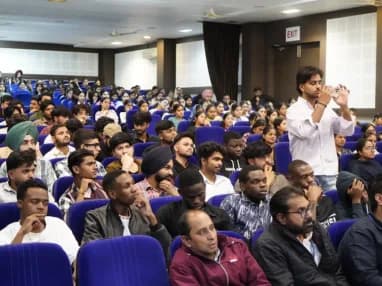
Build skills that hold up beyond the classroom.
What separates this from a playlist of tutorials is supervision on real work. From the second half of the course you build on live client projects with a trainer beside you, make decisions that have consequences, and correct them the following week. That loop is the skill. No employer in Phagwara will take your word for it without work they can inspect.
Be realistic about the money. A fresher who finishes with a working portfolio starts near the bottom of the band and moves quickly; someone who finishes with a certificate and nothing to show does not. The difference is entirely what you built.
The alternative is what most people try first: free videos, a cheap online course, six months of drifting, and knowledge you cannot demonstrate. A structured programme with live projects, a mentor who corrects you, an internship letter and a placement cell that actually calls employers is the difference between knowing the subject and being hired to do it.
Students reach the Phagwara centre from Banga, Nakodar, Kartarpur and the university belt, and the weekend batch exists so a job or a degree does not have to be paused to attend.
Companies across Punjab are building AI-integrated products with teams trained for the pre-AI stack. There is local demand, there are budgets, and there are very few trained people to hand the work to.
What separates this from a playlist of tutorials is supervision. From the second half of the course you build on live client projects with a trainer beside you, make decisions that have consequences, and correct them the following week. That loop is the skill.
A fresher who finishes with a working portfolio typically starts around ₹20,000 – ₹40,000 a month locally and moves up quickly. The ceiling is high, but it is earned — nobody pays a beginner well for a certificate alone.
The same ladder as the three- and six-month tracks, with the language, the data layer and the framework each given real time rather than compressed. It suits a student running the course alongside a degree.
Complete the course with a portfolio of live projects and receive an industry-recognised certificate, plus a documented internship letter accepted by Punjab universities.
Recognised by employers across Punjab and beyond
Based on real client work, not a simulation
Live work you can show in any interview
CV review, mock interviews and hiring drives
Two certificates on completion — the course certificate and a separate capstone project certificate.
The roles this opens, what they pay in Punjab and beyond, and who is hiring for them — drawn from published job-market listings, not a brochure number.
Own a feature from the interface through the API to the database. The core target role of the programme and the most common local title.
Build and maintain the Django and DRF services an application runs on — where the final two months point directly.
Wire LLM APIs and AI features into existing products. This is the gap local companies are trying to fill and the reason the course covers it.
The longer-term destination — system design, integration decisions and technical direction rather than only implementation.
Client applications billed directly. A Phagwara address costs you nothing on a remote brief, and students bill clients well outside Punjab.
Salary outlook — Full-Stack Developer
Builds applications end to end on Python and Django. With two years of delivery experience the starting figure typically doubles, and specialists who keep learning move well beyond it.
Indicative ranges compiled from public job-market listings. Actual offers vary by employer, skillset and interview performance.
Your first working piece, applying web fundamentals, HTML5, CSS3, Bootstrap, JavaScript and the DOM end to end rather than as isolated exercises.
A console and script-level application applying Python fundamentals, object-oriented design and exception handling, versioned in Git.
Work with messy, real inputs across databases, SQL, schema design, Django and the ORM — and defend the choices you made to a trainer.
A Django REST Framework service with serializers, viewsets, JWT authentication and published API documentation, tested in Postman.
A genuine requirement from techcadd’s delivery pipeline, scoped, built and shipped under supervision. This is the one interviewers ask about.
A full-stack project you specify yourself, covering DRF, JWT, LLM integration, Celery background tasks, payments, CI/CD and deployment, presented as your final piece.
Every project moves through the same loop: understand the brief, build with guidance, then explain the decisions behind your work.
Take a real requirement apart before touching a tool — what is being asked, what it needs, and which part to build first.
Fundamentals Build
Work hands-on with your trainer watching the screen, so a wrong turn is caught in the same session rather than three weeks later.
Python & OOP Application
Walk through what you built and why you built it that way. This is the interview rehearsal, run against every project rather than once at the end.
Real-World Data Challenge
There are many places to learn this in Phagwara and the brochure syllabus looks similar at all of them. What differs is who teaches, whether you ever touch real work, and whether anyone picks up the phone after you have paid. techcadd has trained students across Punjab since 2007 on the same model: small batches, working practitioners as trainers, client projects as coursework.
Not "beginner-friendly" as a marketing line. The first module assumes nothing, every term is defined the first time it appears, and no one moves on because the calendar says so.
Licensed software and real accounts, not screenshots or a simulator. The environment you learn in is the environment you will be hired to work in.
Every stage of the course ends in something that runs. You finish with a portfolio of work you built and can explain, which is the first thing an interviewer asks to see.
The roles this course targets hire on demonstrated skill. We are direct with students and parents about which ones do and do not ask for a degree, and what the first year actually pays.
Your trainer delivers client projects for techcadd’s services arm rather than lecturing full-time, so the examples in class are current rather than a case study from five years ago.
Nearly two decades of hiring relationships in Punjab is why a call from our placement cell gets answered and why local employers know what our certificate means.
Find answers to the questions students ask before enrolling.
techcadd runs this programme over 9 months. Weekday, evening and weekend batches cover the same syllabus, and 1-on-1 training is available if you would rather set your own pace. Every class runs for 2 hours, whichever format you choose.
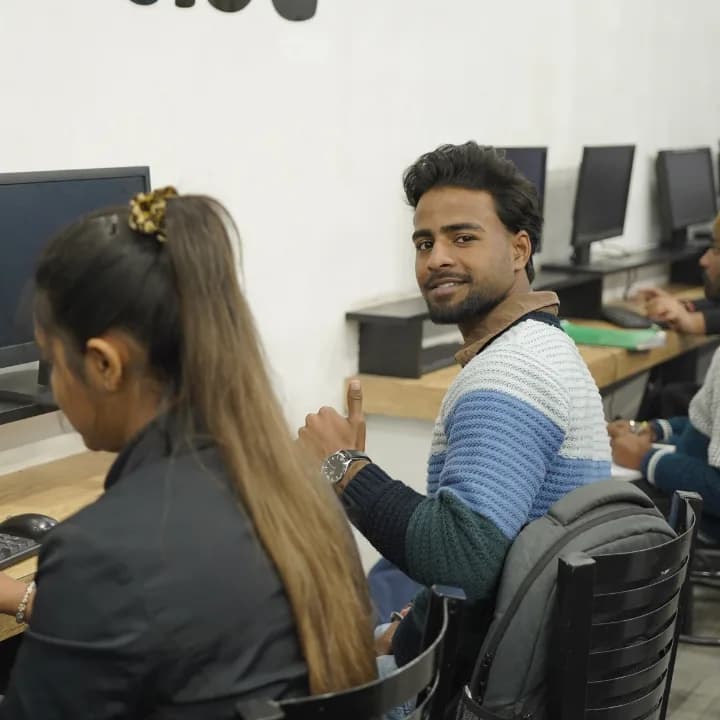
Send your question and a counsellor will call you back about batch timings, fees, EMI options, placement record, or whether this course fits your degree.
One call with a counsellor is usually enough to find out. Book a free demo class and see the lab before you decide.