
Practical Product Design and CAD Training in Phagwara
Learn product design in Phagwara at techcadd. Develop practical skills in CAD drafting, SolidWorks, 3D modelling, product development and design.
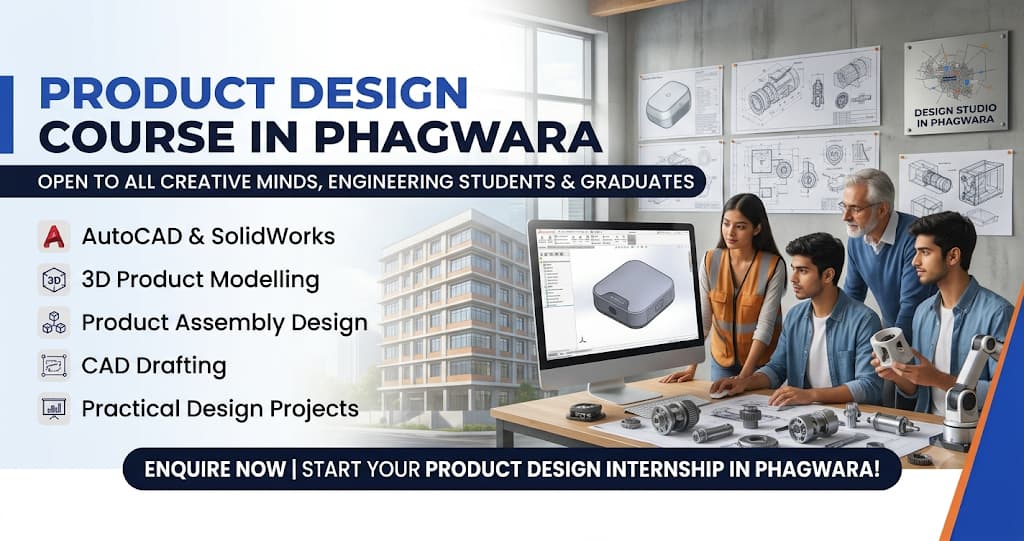
Product Design Course in Phagwara is designed for students, beginners, engineering graduates, diploma holders, and working professionals who want to learn how to design, develop, and visualize products using modern design tools and software.
Product design is the process of creating products that are functional, attractive, user-friendly, and suitable for manufacturing. It involves understanding product requirements, developing design concepts, creating sketches, preparing 3D models, and improving product functionality.
Introduction to Product Design
Product design combines creativity, technical knowledge, and problem-solving skills to develop useful products. It focuses on understanding customer needs, product functionality, appearance, materials, and manufacturing requirements.
Students learn how a product moves from an initial idea to a detailed digital model. They explore the different stages of product development, including concept creation, sketching, design planning, modelling, and design improvement.
This foundation helps learners understand how designers transform ideas into practical product solutions.
Product Sketching and Concept Development
Sketching is one of the first steps in the product design process. It allows designers to communicate their ideas before creating detailed digital models.
Students learn basic product sketching techniques, shape development, proportions, dimensions, and visual presentation. They also understand how to prepare different design concepts and compare possible solutions.
Practical exercises encourage creativity and help students develop confidence in presenting their product ideas.
2D CAD Drafting and Technical Drawings
2D CAD drafting is important for preparing accurate technical drawings of product components.
Students learn drafting tools, drawing commands, dimensions, layers, annotations, and editing techniques. They understand how to create product layouts, component drawings, and engineering documentation.
The training also introduces orthographic views, isometric views, and dimensioning practices used in technical drawings.
3D Modelling and Product Development
3D modelling allows designers to create digital representations of products before physical manufacturing.
Students learn how to create three-dimensional shapes, modify geometries, apply design features, and develop product components using CAD software.
They explore basic modelling techniques such as extrusion, cutting, filleting, chamfering, and pattern creation. Practical exercises help learners understand how individual components are developed into complete product designs.
CAD Software for Product Design
Computer-aided design software plays an important role in modern product development.
Students get introduced to relevant CAD tools such as AutoCAD and SolidWorks, depending on the training module. They learn how these applications are used for drafting, part modelling, assembly design, and technical documentation.
The focus is on understanding software commands and applying them to practical product design exercises.
Product Design and Assembly Design
Product assembly involves combining multiple components to create a complete product. Students learn how individual parts fit together and how different components work as a complete mechanical product.
The training introduces assembly concepts, component positioning, alignment, and basic design relationships. Learners understand how to create product assemblies and identify possible design issues before manufacturing.
Product Materials and Manufacturing Fundamentals
Material selection is an important part of product design because it affects product strength, durability, weight, cost, and performance.
Students explore commonly used materials such as plastic, aluminium, steel, and other engineering materials. They also learn basic manufacturing processes, including casting, machining, moulding, cutting, and fabrication.
This knowledge helps learners understand how product designs are influenced by manufacturing requirements.
Product Visualisation and Rendering
Product visualisation helps designers present their ideas through realistic digital models.
Students learn how to improve the appearance of 3D models by understanding colours, materials, textures, lighting, and presentation techniques.
They explore how product visualisation can be used to communicate design concepts and present products professionally before manufacturing.
Product Design Analysis and Improvement
A good product should be functional, reliable, and suitable for its intended purpose.
Students learn the importance of reviewing product dimensions, component arrangements, material selection, and design requirements. They understand how to identify basic design problems and improve product models through modifications.
This module introduces the concept of design optimisation and encourages learners to develop practical problem-solving skills.
Industrial Applications of Product Design
Product design is used in various industries, including automobile manufacturing, consumer electronics, furniture production, industrial machinery, medical equipment, and household product manufacturing.
Students understand how product designers work with engineers, manufacturers, and development teams to create products that meet technical and customer requirements.
Learning product design software can help students understand modern product development workflows and industrial design applications.
Career Opportunities After Product Design Course
Learning product design can help students develop creative and technical skills required in different design-related industries.
After developing relevant knowledge and practical experience, learners can explore career opportunities such as:
Product Design Assistant
CAD Designer
3D Modelling Designer
Mechanical Design Assistant
Industrial Design Assistant
Product Development Assistant
CAD Draftsman
Design Technician
Career opportunities depend on technical skills, portfolio quality, educational qualifications, and industry requirements.
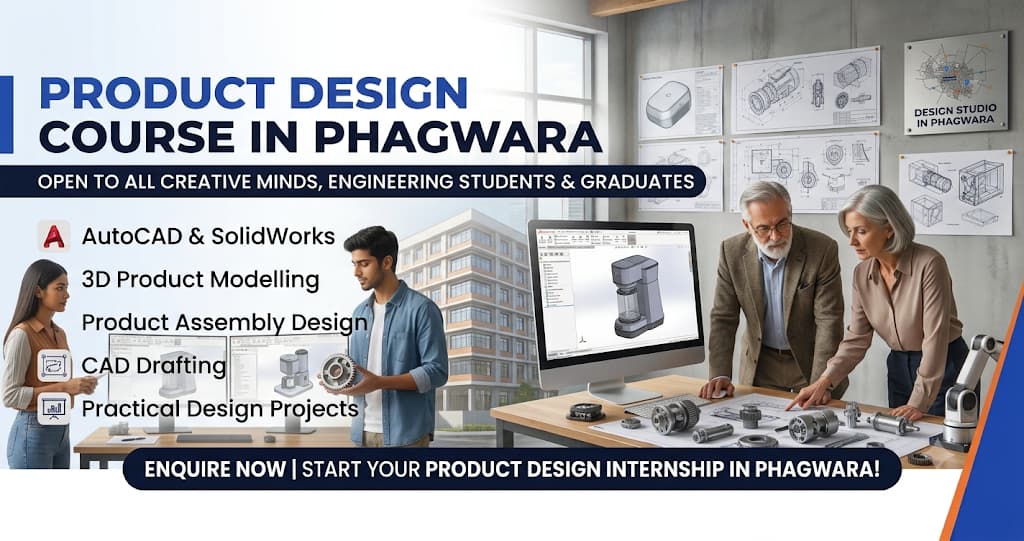
Product Design Fundamentals
Understand product development concepts, design principles, functionality, aesthetics, and customer requirements.
Product Sketching and Concept Development
Learn basic sketching, shape creation, proportions, and techniques for developing product design ideas.
2D CAD Drafting
Develop technical drawing skills using CAD tools, dimensions, layers, annotations, and drafting commands.
3D Modelling and Product Development
Learn to create three-dimensional product models using different modelling tools and design features.
CAD Software Training
Explore AutoCAD and SolidWorks fundamentals for product modelling, drafting, and mechanical design applications.
Product Assembly Design
Understand how individual components are combined to create complete product assemblies.
Materials and Manufacturing
Learn about engineering materials, manufacturing processes, material selection, and basic production methods.
Product Visualisation and Rendering
Explore colours, textures, materials, lighting, and realistic product presentation techniques.
Practical Product Design Projects
Work on mechanical components, household products, industrial models, and 3D product development assignments.
Industrial Applications and Career Skills
Understand product design applications in manufacturing, automobile, electronics, and industrial product development.