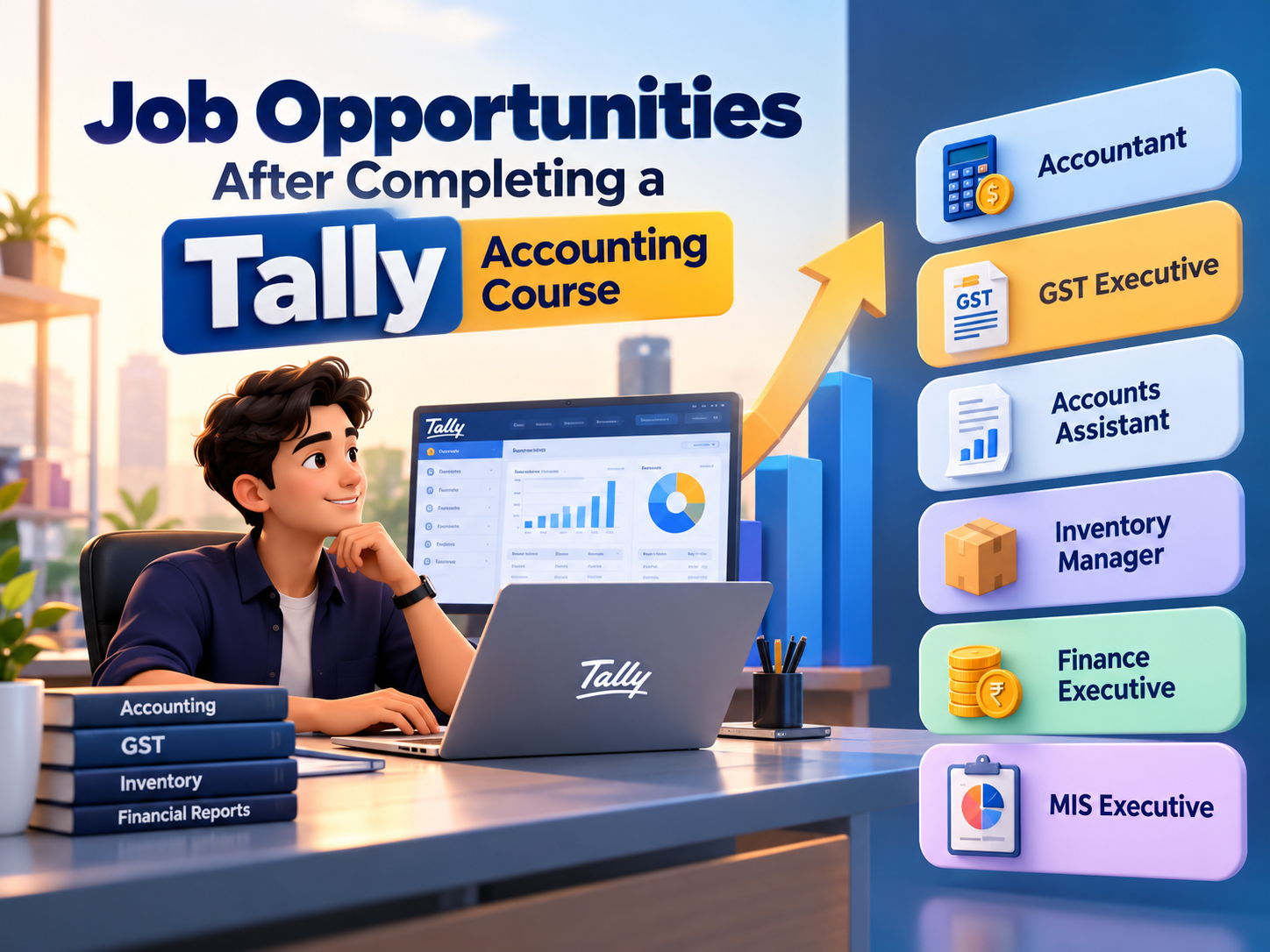
Job Opportunities After Completing a Tally Accounting Course
Explore job opportunities after completing a Tally Accounting Course. Learn about accounting, billing, GST, Tally jobs and career skills at Techcadd.

Job Opportunities After Completing a Tally Accounting Course
A Tally Accounting Course can help learners develop practical knowledge of accounting software, financial transactions, billing, GST, inventory management, and business records. Tally is widely used by businesses to manage day-to-day accounting activities, making these skills useful for students, commerce learners, job seekers, and working professionals.
At Techcadd, learners can build practical accounting knowledge by understanding how Tally is used for real business tasks. Along with software skills, learners can also develop an understanding of accounting concepts and documentation processes that are useful in different workplace environments.
Understanding the Role of Tally in Accounting
Tally is commonly used to record and manage financial information for businesses. It can support activities such as maintaining ledgers, recording transactions, managing invoices, tracking inventory, and preparing financial reports.
A Tally accounting course generally helps learners understand:
Company creation and configuration
Ledger and group creation
Voucher entries
Sales and purchase transactions
Cash and bank transactions
Billing and invoicing
GST-related accounting
Inventory management
Financial reports
Basic accounting documentation
These skills can help learners understand the practical workflow followed in accounting-related roles.
Job Opportunities After Learning Tally
Completing a Tally course can open different entry-level opportunities in accounting and business administration. The exact role and responsibilities can vary depending on an individual's education, experience, and additional skills.
Some common job roles include:
Junior Accountant
Accounts Assistant
Tally Operator
Accounting Executive
Billing Executive
Accounts Executive
GST Assistant
Payroll Assistant
Inventory Assistant
Back Office Executive
Learners can explore these roles in small businesses, offices, trading companies, service organizations, accounting firms, and other workplaces where accounting software is used.
Junior Accountant
A Junior Accountant generally assists with day-to-day accounting activities. The role may involve recording transactions, maintaining financial records, preparing invoices, and organizing accounting documents.
Tally skills can help beginners understand how transactions are entered and maintained within accounting software. Basic knowledge of accounting principles along with Tally can be useful when starting in this type of position.
Accounts Assistant
Accounts Assistants support accounting teams with routine financial and administrative activities. Their responsibilities may include maintaining records, entering transactions, checking documents, preparing invoices, and assisting with reports.
A Tally course can help learners become familiar with the software environment and develop practical knowledge of common accounting tasks.
Tally Operator
A Tally Operator primarily works with accounting software to record and manage business transactions. The work may include data entry, ledger maintenance, invoice preparation, and updating financial records.
This role can be suitable for beginners who have developed practical Tally skills and understand basic accounting concepts.
Billing Executive
Billing is an important part of many businesses. Billing Executives may prepare sales invoices, maintain billing records, enter customer transactions, and coordinate basic documentation.
Tally training can help learners understand invoice creation, sales entries, customer records, and related accounting processes.
GST Assistant
Businesses that deal with GST-related transactions need employees who understand basic GST accounting processes. A Tally course that includes GST can help learners understand how tax-related transactions are recorded and managed within accounting software.
Learners can develop knowledge of:
GST sales and purchase entries
Tax-related invoice information
GST ledger management
Basic GST reports
Recording business transactions with applicable tax details
For more advanced tax responsibilities, additional GST and taxation knowledge may be required.
Inventory and Accounts Roles
Many businesses manage both accounting and inventory through software. Employees may need to maintain stock records, update purchase and sales information, and coordinate inventory-related documentation.
Tally training can introduce learners to:
Stock groups
Stock items
Units of measurement
Purchase entries
Sales entries
Inventory reports
Stock tracking
These skills can be useful for accounting and inventory-related positions.
Skills That Can Improve Career Opportunities
Learning Tally alone is useful, but combining it with other relevant skills can make a learner's profile more practical. Learners can consider developing:
Basic accounting principles
GST knowledge
MS Excel skills
Business communication
Invoice and billing knowledge
Financial documentation skills
Payroll basics
Inventory management
Data entry and record management
Basic taxation concepts
Techcadd focuses on practical learning so that learners can understand how accounting software and related skills are applied to everyday business activities.
Practical Learning at Techcadd
A practical approach can help learners understand Tally beyond basic software navigation. At Techcadd, learners can work on accounting concepts, transaction entries, billing, GST-related processes, inventory, and financial reporting.
Practical exercises can help learners understand how different accounting activities connect with each other. Working with sample business transactions can also help beginners gain confidence while learning the software.
Who Can Consider a Tally Accounting Course?
A Tally accounting course can be useful for different types of learners, including:
Commerce students
Graduates
Beginners interested in accounting
Job seekers
Small business owners
Working professionals
Individuals interested in billing and accounting roles
Learners with a basic understanding of computers can gradually develop accounting software skills through regular practice.
Conclusion
A Tally Accounting Course can help learners develop practical skills for accounting, billing, GST, inventory, and financial record management. These skills can support entry-level opportunities such as Junior Accountant, Accounts Assistant, Tally Operator, Billing Executive, Accounting Executive, and GST Assistant.
With practical training at Techcadd, learners can strengthen their understanding of Tally and related accounting processes. Combining Tally with skills such as MS Excel, GST, communication, and basic accounting can further help learners prepare for different workplace responsibilities.
Job Opportunities After Completing a Tally Accounting Course
Explore Tally-based career opportunities and build practical skills in accounting, GST, billing, inventory and financial reporting.