
Network Security Scanner
Build a Python-based network scanning utility to identify active hosts, discover open ports, analyse network services, and document potential security risks in an authorised lab environment.
- Python
- Nmap
Learn cybersecurity, ethical hacking, network security, Linux, penetration testing, and vulnerability assessment through practical labs and real-world security scenarios.

Admissions open
Free demo class & counselling
Session slots
Cyber Security and Ethical Hacking is a practical training course designed to help learners understand how digital systems, computer networks, and web applications are protected against cyber threats. The course introduces essential security concepts, ethical hacking methodologies, and industry-relevant tools used to identify vulnerabilities and strengthen system security. Build a strong technical foundation in networking, Linux, cybersecurity fundamentals, network security, web application security, and penetration testing. Learn how to analyse network traffic, identify security weaknesses, assess vulnerabilities, and understand common attack techniques in controlled laboratory environments. Gain hands-on experience with tools such as Kali Linux, Nmap, Wireshark, and web security testing utilities through guided exercises, practical demonstrations, and cybersecurity projects. Develop problem-solving, analytical thinking, and technical reporting skills while learning how security professionals investigate risks and recommend effective solutions. This course is suitable for students, beginners, IT professionals, networking enthusiasts, and aspiring cybersecurity specialists who want to develop practical security knowledge. No previous professional cybersecurity experience is required, although basic computer skills and an interest in technology are recommended. Prepare for further learning and career development in cybersecurity, ethical hacking, vulnerability assessment, penetration testing, network security, and security operations. With consistent practice and continued skill development, learners can build a foundation for pursuing entry-level opportunities and industry-recognised cybersecurity certifications. All practical exercises should be performed only in authorised laboratory environments or on systems for which explicit permission has been granted. The course emphasises responsible security testing, ethical conduct, vulnerability remediation, and the importance of protecting digital information.

Build a Python-based network scanning utility to identify active hosts, discover open ports, analyse network services, and document potential security risks in an authorised lab environment.

Analyse network packets using Wireshark to understand TCP/IP communication, inspect DNS queries, examine HTTP traffic, and identify suspicious communication patterns.

Assess an intentionally vulnerable web application to identify common security weaknesses, evaluate their potential impact, and recommend practical remediation measures.
Configure and secure a Linux system by reviewing user permissions, strengthening SSH settings, managing services, applying updates, and documenting security improvements.
The working loop
Every project moves through the same loop: understand the brief, build with guidance, then explain the decisions behind your work.
Learn the fundamentals of cybersecurity, understand the project requirements, identify security objectives, and determine what needs to be tested before beginning practical work.
Network Security Scanner
Configure a safe, controlled cybersecurity lab using Linux, virtual machines, and essential security tools to practise without affecting real systems.
Network Traffic Analyzer
Analyse network traffic, perform authorised network scans, explore system configurations, and identify potential security vulnerabilities using industry-relevant tools.
Web Application Vulnerability Assessment
Perform practical security assessments in authorised environments, investigate identified weaknesses, and verify findings through controlled testing.
Linux System Hardening
Apply appropriate security measures, strengthen system configurations, recommend vulnerability fixes, and document improvements to reduce security risks.
There are many places to learn this in Phagwara and the brochure syllabus looks similar at all of them. What differs is who teaches, whether you ever touch real work, and whether anyone picks up the phone after you have paid. techcadd has trained students across Punjab since 2016 on the same model: small batches, working practitioners as trainers, client projects as coursework.
Learn from trainers with practical industry experience who can connect cybersecurity concepts with real-world challenges, tools, and professional practices.
Develop practical skills through guided lab exercises, cybersecurity simulations, and authorised security testing using industry-relevant tools.
Apply your knowledge through practical cybersecurity projects involving network scanning, traffic analysis, Linux hardening, and vulnerability assessment.
Build familiarity with tools such as Kali Linux, Nmap, Wireshark, and Burp Suite to understand how cybersecurity professionals analyse systems and assess security weaknesses.
IT companies, cybersecurity firms, managed service providers, banks, telecom operators, and corporate security teams across Phagwara, Jalandhar, and Punjab seek skilled professionals to help protect networks, applications, and digital infrastructure.
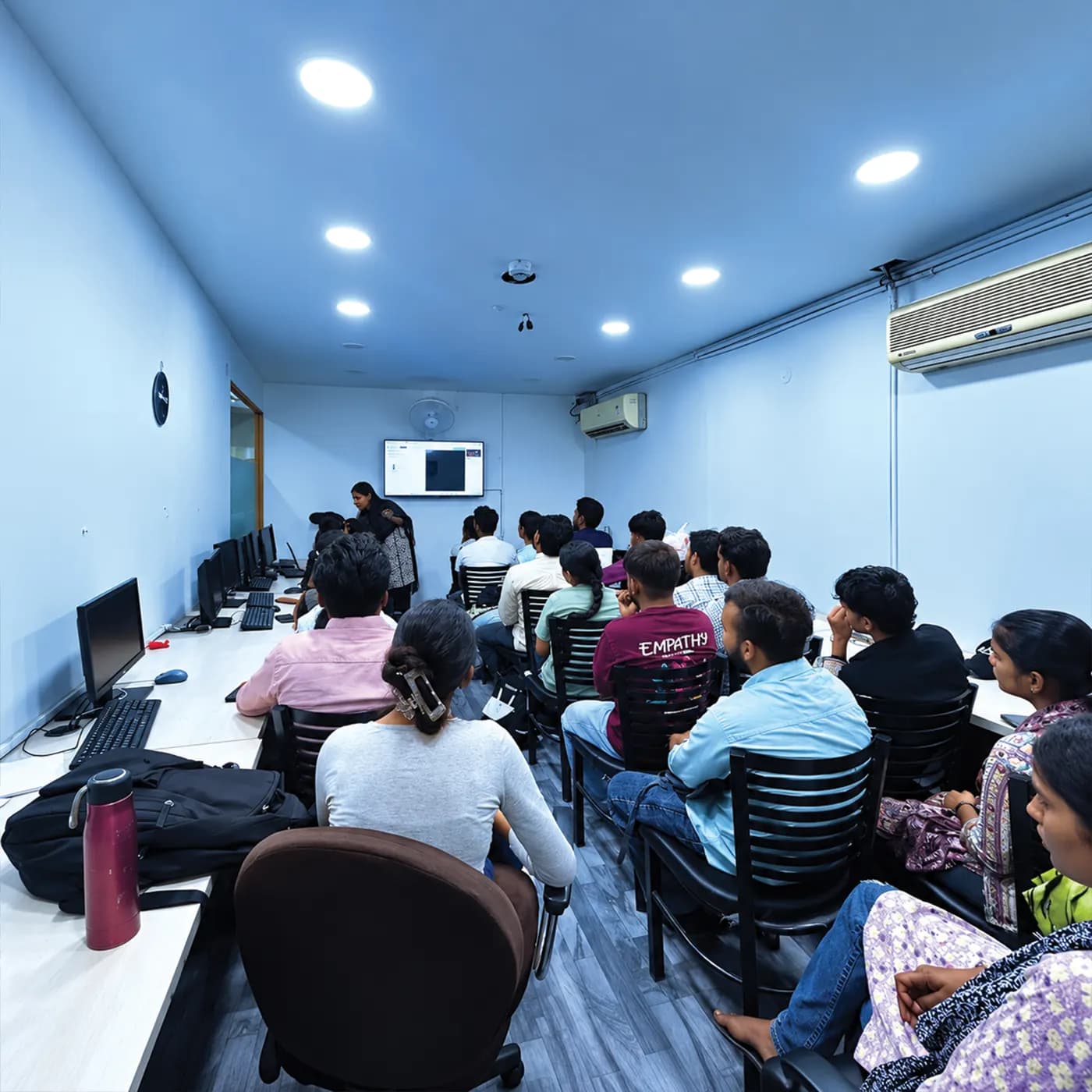
Build skills that hold up beyond the classroom.
What separates this from a playlist of tutorials is supervision on real work. From the second half of the course you build on live client projects with a trainer beside you, make decisions that have consequences, and correct them the following week. That loop is the skill. No employer in Phagwara will take your word for it without work they can inspect.
Be realistic about the money. A fresher who finishes with a working portfolio starts near the bottom of the band and moves quickly; someone who finishes with a certificate and nothing to show does not. The difference is entirely what you built.
The alternative is what most people try first: free videos, a cheap online course, six months of drifting, and knowledge you cannot demonstrate. A structured programme with live projects, a mentor who corrects you, an internship letter and a placement cell that actually calls employers is the difference between knowing the subject and being hired to do it.
Students reach the Phagwara centre from Banga, Nakodar, Kartarpur and the university belt, and the weekend batch exists so a job or a degree does not have to be paused to attend.
Complete 2–3 practical cybersecurity projects to showcase your technical skills, demonstrate your knowledge in interviews, and build a portfolio beyond a course certificate.
Practise reconnaissance, network scanning, service enumeration, and vulnerability assessment using industry-relevant tools in authorised laboratory environments.
Develop practical familiarity with Kali Linux, Nmap, Wireshark, Burp Suite, and other tools used for security testing, network analysis, and vulnerability identification.
Build a strong technical foundation in TCP/IP, network protocols, Linux commands, system administration, and security configuration to support your cybersecurity learning journey.
Learn to identify common security weaknesses, analyse potential risks, document findings, and recommend remediation measures through guided cybersecurity exercises.
Strengthen your technical knowledge, problem-solving abilities, and security reporting skills to prepare for further training and entry-level cybersecurity opportunities.

The Cyber Security and Ethical Hacking course is built for people at six different starting points, and the batch is deliberately mixed. What matters far more than your background is turning up consistently and finishing what each module asks you to build.
Fresh graduates who want a structured, practical route into cybersecurity and the IT industry.
Students pursuing BCA, B.Tech, B.Sc IT, MCA, or related degrees who want to develop hands-on cybersecurity skills alongside their studies.
Individuals interested in technology who want to learn networking, Linux, ethical hacking, and cybersecurity fundamentals from the ground up.
Network engineers, system administrators, and IT support professionals looking to strengthen their knowledge of network security, vulnerability assessment, and threat detection.
Professionals exploring a transition into cybersecurity who want to build relevant technical skills through structured learning and practical exercises.
The toolchain behind the craft
Everything below is installed on the lab machines and used on live client work, not shown once in a slide and forgotten.
Complete the course with a portfolio of live projects and receive an industry-recognised certificate, plus a documented internship letter accepted by Punjab universities.
Recognised by employers across Punjab and beyond
Based on real client work, not a simulation
Live work you can show in any interview
CV review, mock interviews and hiring drives


Two certificates on completion — the course certificate and a separate capstone project certificate.
The roles this opens, what they pay in Punjab and beyond, and who is hiring for them — drawn from published job-market listings on one comparable scale, not a brochure number.

Send your question and a counsellor will call you back about batch timings, fees, EMI options, placement record, or whether this course fits your degree.
One call with a counsellor is usually enough to find out. Book a free demo class and see the lab before you decide.