
Bank Reconciliation in Phagwara
Learn Bank Reconciliation in Phagwara. Master bank statement matching, cash book comparison, BRS preparation, Excel formulas, and financial reporting.
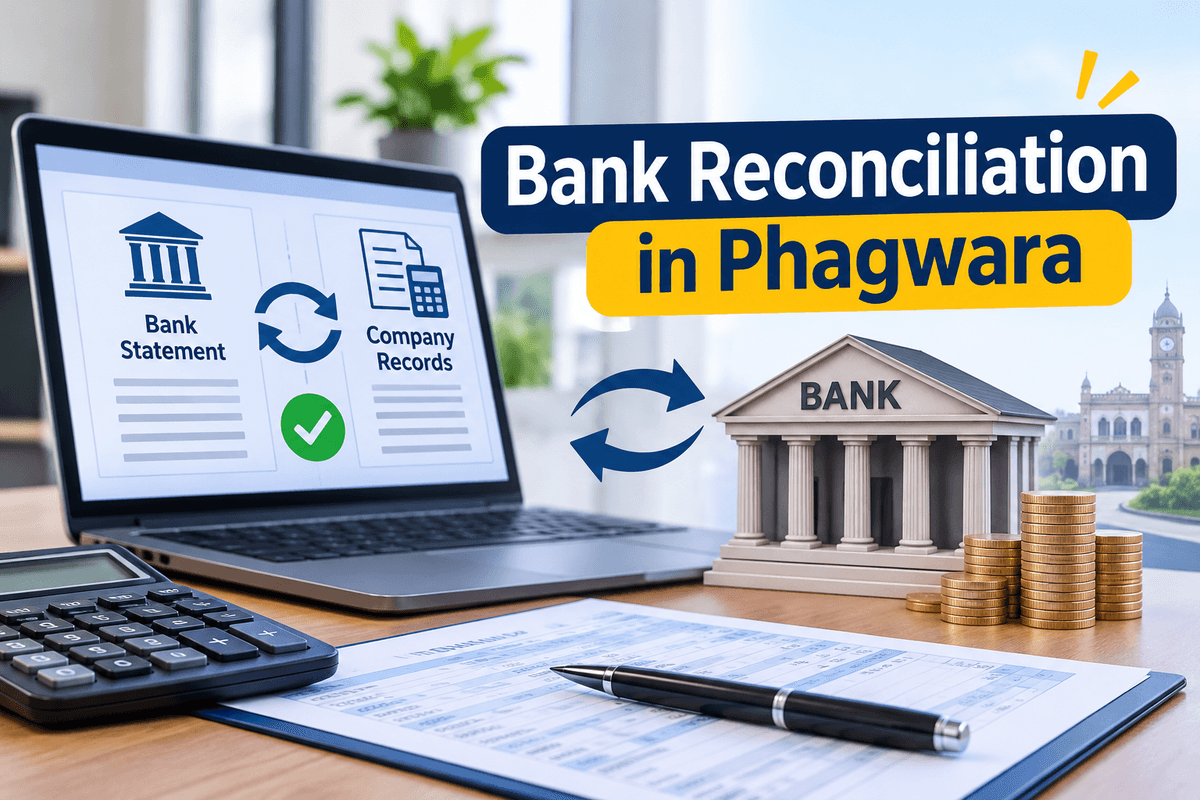
Bank Reconciliation in Phagwara – Learn Bank Statement Matching and Financial Reporting Skills
Bank Reconciliation is an important accounting process used to compare a company's bank statement with its cash book or accounting records. Businesses use bank reconciliation to identify differences in transactions, verify payments and receipts, detect errors, and maintain accurate financial records. Learning Bank Reconciliation in Excel helps individuals understand how to match banking transactions, identify outstanding payments, track deposits, and prepare accurate financial reports. Bank Reconciliation in Phagwara focuses on developing practical knowledge of bank statement analysis, Excel formulas, transaction matching, and financial record management.
The Bank Reconciliation training in Phagwara is suitable for school students, college students, graduates, freshers, job seekers, accountants, finance professionals, and beginners who want to develop practical accounting and Excel skills. The training focuses on understanding bank statements, cash book entries, reconciliation statements, Excel functions, transaction verification, and financial reporting techniques.
Understanding Bank Reconciliation Basics
The training introduces learners to the concept of bank reconciliation and its importance in business accounting. Students understand why the balance shown in a company's cash book may differ from the balance available in its bank statement.
Topics include bank statements, cash book records, debit and credit transactions, opening and closing balances, deposits, withdrawals, bank charges, and transaction entries. These fundamentals help learners understand how businesses maintain accurate banking records.
Bank Statement and Cash Book Comparison
Comparing bank statements with cash book records is an essential part of the reconciliation process. Learners understand how to examine financial transactions and identify differences between recorded and actual bank balances.
The training covers:
Comparing bank statements with cash book entries
Identifying deposits not yet credited
Checking outstanding cheques and payments
Identifying bank charges and service fees
Understanding direct deposits and withdrawals
Checking interest credited by banks
Identifying incorrect or missing entries
These skills help learners understand the reasons behind differences in banking records.
Bank Reconciliation Statement Preparation
A Bank Reconciliation Statement (BRS) helps explain the differences between the bank balance shown in accounting records and the balance shown in the bank statement. Students learn how to prepare reconciliation statements using practical financial examples.
Topics include starting balances, outstanding cheques, deposits in transit, direct bank payments, bank charges, interest entries, and adjustments. Learners also understand how to calculate and verify the adjusted bank balance.
Excel Formulas for Bank Reconciliation
Microsoft Excel makes bank reconciliation easier by helping users organize transactions, compare financial records, and identify mismatched entries. Learners explore useful Excel formulas and functions for reconciliation activities.
The training covers SUM, IF, COUNTIF, SUMIF, VLOOKUP, XLOOKUP, INDEX, MATCH, and conditional formatting. Students learn how to match transaction amounts, identify missing entries, highlight differences, and calculate balances accurately.
Transaction Matching and Data Verification
Matching transactions between bank statements and cash book records helps maintain accurate financial information. Students learn practical methods to compare transaction dates, descriptions, reference numbers, and amounts.
Topics include transaction identification, duplicate entry detection, missing transaction checks, date matching, amount verification, and error identification. These techniques help learners improve accuracy while working with financial datasets.
Practical Bank Reconciliation in Excel
Hands-on practice helps students understand how bank reconciliation is performed in real accounting and office environments. Learners work with sample bank statements and cash book datasets to prepare reconciliation reports.
Practical activities may include:
Comparing bank statements with cash book records
Identifying outstanding cheques and pending deposits
Preparing Bank Reconciliation Statements
Matching debit and credit transactions
Using Excel formulas to identify unmatched entries
Finding duplicate and missing transactions
Applying conditional formatting to highlight differences
Calculating adjusted bank balances
Preparing monthly bank reconciliation reports
Maintaining organized financial transaction records
These activities help learners develop confidence in handling banking information and preparing accurate financial reports.
Who Can Join Bank Reconciliation Training in Phagwara?
Bank Reconciliation training in Phagwara is suitable for anyone interested in learning practical accounting, financial record management, and Excel-based reporting skills. School and college students can develop useful accounting knowledge, while graduates and freshers can prepare for entry-level accounting and office responsibilities.
Job seekers interested in Accountant, Accounts Assistant, Banking Operations Assistant, and Finance Executive roles can benefit from learning reconciliation techniques. Accountants, business owners, office administrators, and working professionals can also improve their ability to verify transactions and maintain financial records.
Basic computer and accounting knowledge can be helpful, but beginners can learn the concepts step by step.
Benefits of Learning Bank Reconciliation Skills
Learning bank reconciliation helps individuals understand financial transactions, identify discrepancies, and maintain accurate accounting records. Excel-based reconciliation techniques can simplify transaction matching, reduce manual errors, and improve reporting efficiency.
These skills are useful in accounting departments, banking operations, finance teams, business administration, and office management. Knowledge of Bank Reconciliation also strengthens practical understanding of financial reporting and accounting processes.
Why Choose Practical Bank Reconciliation Training in Phagwara?
Practical training helps learners understand how bank reconciliation is performed using real-world financial examples. The learning approach focuses on bank statement comparison, cash book verification, Excel formulas, transaction matching, and reconciliation statement preparation.
Students get opportunities to work with sample financial datasets, identify transaction differences, prepare BRS reports, and apply Excel functions to accounting tasks. The focus is on developing useful workplace skills through practical exercises rather than learning accounting concepts without application.
Enrol in Bank Reconciliation Training in Phagwara
Bank reconciliation is an essential accounting skill for maintaining accurate financial records and verifying business transactions. If you want to learn bank statement comparison, cash book matching, BRS preparation, Excel formulas, and financial reporting, Bank Reconciliation training in Phagwara can help you develop practical knowledge.
Master Bank Reconciliation. Strengthen Your Accounting Skills.
Build practical accounting and financial reporting skills with hands-on training. Learn bank statement matching, cash book comparison, Bank Reconciliation Statement (BRS) preparation, transaction verification, Excel formulas, and financial record management at Techcadd Phagwara.