

Neural Network From Scratch
Build a neural network in Python and understand every part of it — neurons, layers, weights, activation functions, training and predictions.
- Python
- Neural Networks
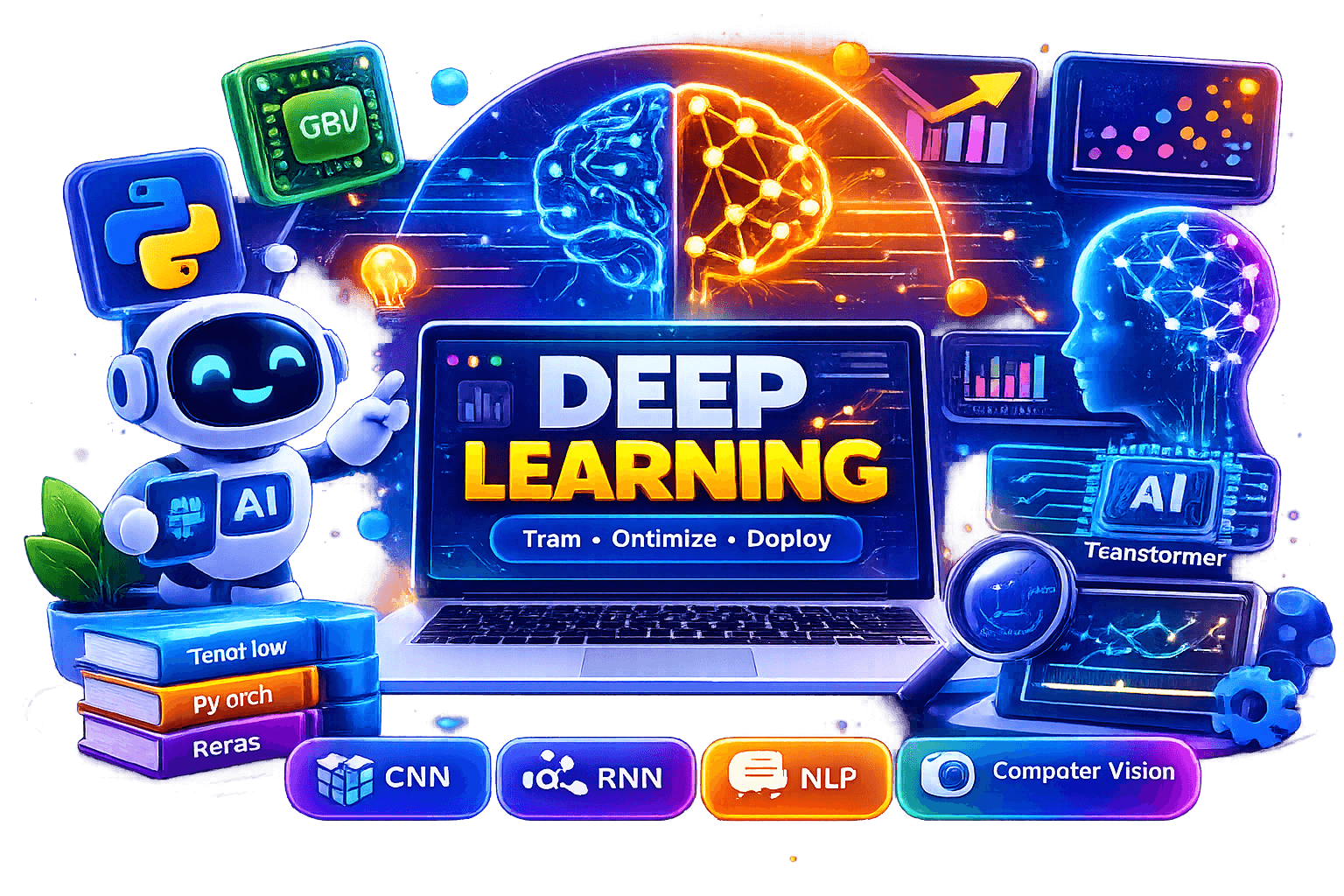
Build and train neural networks — CNNs, RNNs, computer vision and NLP on TensorFlow and Keras, with live AI projects and placement assistance.
25,000+
Students trained
since 2007
4.9★
Google rating
556+ reviews
100%
Practical training
live client work
Techcadd’s Deep Learning Programming Course in Phagwara is an industry-focused programme for students, graduates, job aspirants, aspiring AI engineers, developers and professionals who want practical skill in deep learning. It covers Python, data processing, neural networks and deep neural networks, computer vision, natural language processing, convolutional and recurrent networks, model training, TensorFlow, Keras and AI-powered development tools. The training is hands-on throughout — live projects, practical assignments and industry-standard tooling — so you learn to prepare datasets, design architectures, train models, evaluate results and build applications that recognise patterns and solve genuinely hard problems. Unlike purely theoretical education, you work with real datasets, real architectures and real performance optimisation, and finish understanding how companies use deep learning for image recognition, language processing, automation and recommendation.

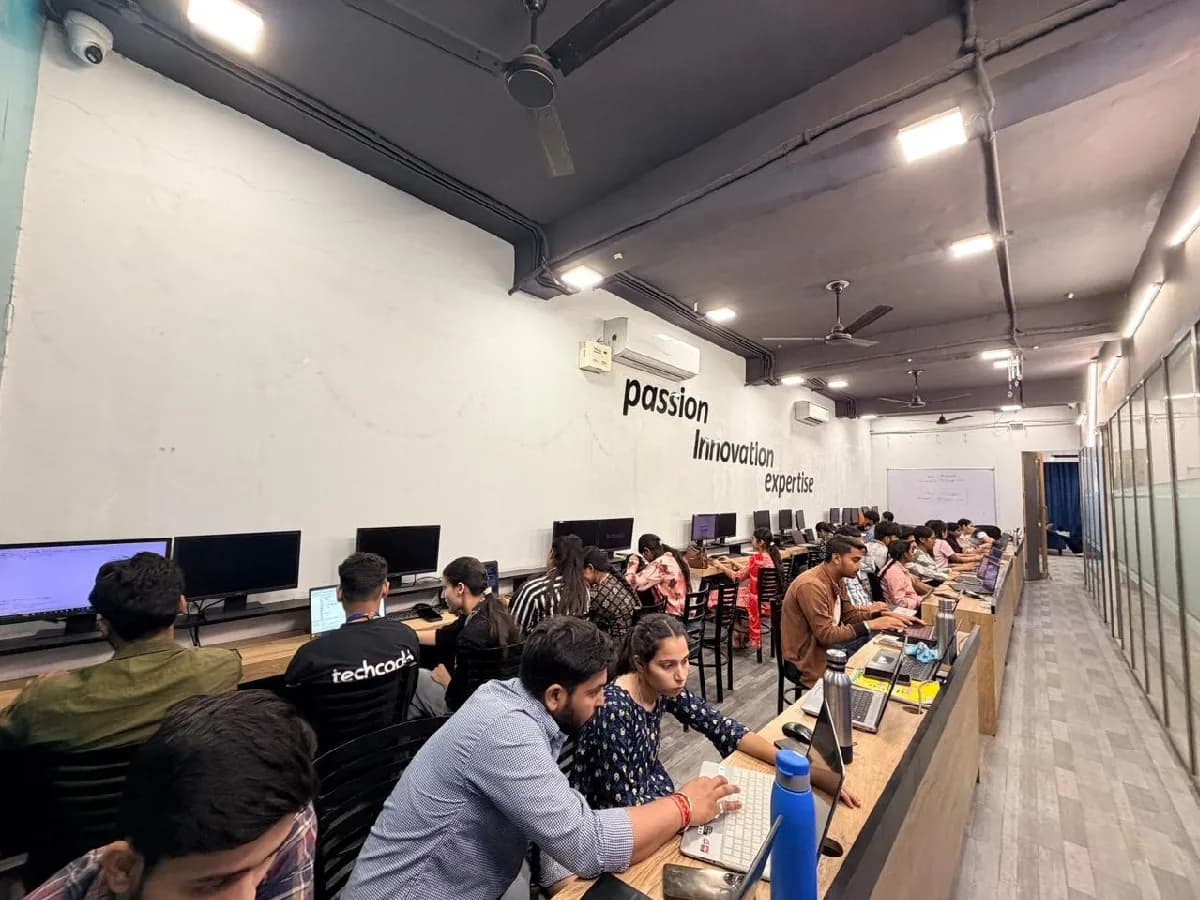
The Deep Learning course is built for people at six different starting points, and the batch is deliberately mixed. What matters far more than your background is turning up consistently and finishing what each module asks you to build.
Start with Python, data handling, AI and machine learning before neural networks themselves. A structured course walks through datasets, ML basics, networks and deep learning models step by step — a smart way to explore AI alongside your studies.
Employers value academic knowledge combined with practical AI skill. Whatever you study — computer science, engineering, IT, mathematics, statistics or data science — deep learning shows you how modern systems process genuinely complex information.
Learning advanced AI alone is confusing. A structured path replaces certificate-collecting with understanding how real projects run: preparing datasets, designing networks, training, testing outputs and improving performance.
Already in software development, IT, data science or analytics? Deep learning makes your experience more valuable. Developers learn how AI models get integrated; data professionals learn how deep networks find patterns simpler methods miss.
You do not have to become an AI engineer. Understanding deep learning helps you judge decisions about automation, intelligent products and AI-powered solutions — and makes working with AI developers and data scientists far easier.
AI model development, image classification, object detection, NLP applications, predictive systems and deep learning automation are all billable — and command higher rates than general programming work.
Deep learning is where the AI premium actually sits — vision and language work pays more than general ML because far fewer people can take a model from architecture to something that performs on real data. That gap is the whole argument for this course: there is local demand, there are budgets, and there are very few trained people to hand the work to.
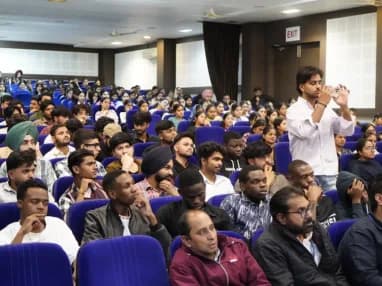
Build skills that hold up beyond the classroom.
What separates this from a playlist of tutorials is supervision on real work. From the second half of the course you build on live client projects with a trainer beside you, make decisions that have consequences, and correct them the following week. That loop is the skill. No employer in Phagwara will take your word for it without work they can inspect.
Be realistic about the money. A fresher who finishes with a working portfolio starts near the bottom of the band and moves quickly; someone who finishes with a certificate and nothing to show does not. The difference is entirely what you built.
The alternative is what most people try first: free videos, a cheap online course, six months of drifting, and knowledge you cannot demonstrate. A structured programme with live projects, a mentor who corrects you, an internship letter and a placement cell that actually calls employers is the difference between knowing the subject and being hired to do it.
Students reach the Phagwara centre from Banga, Nakodar, Kartarpur and the university belt, and the weekend batch exists so a job or a degree does not have to be paused to attend.
Healthcare, finance, autonomous systems, e-commerce, cybersecurity, IT, robotics, media and intelligent automation all use deep learning for problems nothing else solves. Neural networks, computer vision, NLP, TensorFlow, CNN and RNN apply across all of them.
Training a network is one part. Python and data handling, AI and ML fundamentals, deep networks, activation and loss functions, forward and backward propagation, optimisers, CNNs, RNNs, computer vision, NLP, validation, regularisation and tuning are the rest.
Tutorials introduce neural networks. Practical training teaches you to build them — preprocessing, network development, image classification, model training, computer vision, NLP and performance optimisation.
Writing Python matters; building systems that learn from data is the bigger challenge. Recognising images, understanding text, detecting objects, processing speech and automating complex decisions all need judgement about accuracy, loss and validation.
AI is changing how applications get built and how information is processed. But tools do not replace understanding: the problem, dataset, architecture, training process, limitations and metrics still need someone who knows what they are looking at.
The syllabus is arranged so every module produces an asset rather than a set of notes. You will cover python & deep learning foundations, neural networks & core concepts, deep neural network development, computer vision & cnns, and finish with a live project built on Python, Jupyter Notebook, Google Colab. Modules run in the order a real project runs: foundations first, then the core skills, then applied work under supervision, then the portfolio and interview preparation that turn all of it into an offer letter.
The working knowledge the job description actually lists.
Deep Neural Network Development
Design and train deeper architectures, and learn what hidden layers are really buying you.
4 weeks · 14 sessions
Computer Vision & CNNs
Discover how machines learn to understand images, and build one that does.
4 weeks · 14 sessions
NLP & Sequence Models
Learn how intelligent systems process human language, where order and context matter.
3 weeks · 12 sessions
Topics covered
The Deep Learning course runs as three nested levels. Each one builds on the last, so you can start at the foundation and continue later without repeating anything.
Understand how Python, AI, machine learning and neural networks fit together — programming, AI concepts, data handling and your first networks.
What it covers
+ 3 more
Skills & tools
Recommended for
AI Trainee, Deep Learning Intern, Python AI Intern, Machine Learning Trainee and junior technical roles.
Practical skill in deep networks, model training, TensorFlow, computer vision basics, NLP fundamentals and optimisation — the job-ready level.
What it covers
+ 5 more
Skills & tools
Recommended for
Junior AI Engineer, Deep Learning Developer, Computer Vision Trainee, NLP Trainee and Machine Learning Engineer roles.
Advanced architectures with computer vision, NLP, generative AI concepts, automation, deployment and professional project development.
What it covers
+ 6 more
Skills & tools
Recommended for
Deep Learning Engineer, AI Engineer, Computer Vision Engineer, NLP Engineer, AI Developer and advanced ML pathways.
Python for AI
AI fundamentals
Neural Networks
Deep Neural Networks
TensorFlow & Keras
Model training
Model optimisation
CNN
Computer Vision
NLP fundamentals
Advanced NLP
Transfer learning
Object detection basics
Transformers basics
Generative AI concepts
AI & prompt engineering
The programme is nested, not parallel. The 3-month track gives you the foundation in AI, Python and neural networks. The 6-month course includes those fundamentals and continues into professional network development, TensorFlow, computer vision, NLP and optimisation. The 9-month programme adds advanced architectures, transfer learning, object detection, transformers, generative AI concepts and advanced portfolio work — so moving to a longer duration never means starting from zero.
The toolchain behind the craft
Everything below is installed on the lab machines and used on live client work, not shown once in a slide and forgotten.
Complete the course with a portfolio of live projects and receive an industry-recognised certificate, plus a documented internship letter accepted by Punjab universities.
Recognised by employers across Punjab and beyond
Based on real client work, not a simulation
Live work you can show in any interview
CV review, mock interviews and hiring drives
Two certificates on completion — the course certificate and a separate capstone project certificate.
The roles this opens, what they pay in Punjab and beyond, and who is hiring for them — drawn from published job-market listings on one comparable scale, not a brochure number.
Salary outlook
Designs, trains and optimises neural networks for vision, language and complex pattern problems. Earnings vary with your skills, project experience, portfolio, certifications, company, location and technical depth.
Punjab — AI / Deep Learning
Delhi / NCR — AI / Deep Learning Engineer
Remote / Freelance AI Projects
Indicative ranges for Deep Learning Engineer roles, compiled from public job-market listings and drawn on the same scale in every market. Actual offers vary by employer, skillset and interview performance — Punjab pay typically reaches 2× the fresher ceiling within two years of delivery experience.
Talk about your target roleDeep Learning Engineer, AI Engineer, Computer Vision Engineer, NLP Engineer, Machine Learning Engineer and Python AI Developer. These are specialist roles, and practical project work matters far more than certificates.
A fresher with real project work starts around ₹25,000 – ₹40,000 a month in the Punjab market — the highest fresher band in the catalogue — rising to ₹40,000 – ₹70,000 with two years of experience. Delhi/NCR reaches ₹1,00,000+ for engineers with a track record.
Yes, and deep learning has the highest freelance ceiling here — ₹50,000 to over ₹1,20,000 a month once you have shipped real work. It starts around ₹15,000 – ₹35,000, because freelance income ramps rather than starting at a salary.
IT companies building AI-powered software, startups developing intelligent products, technology companies working on computer vision, data science and AI teams, healthcare and finance organisations, and R&D teams — plus remote and freelance clients.
It helps but is not required — this course covers ML fundamentals before reaching neural networks. If you are undecided: Machine Learning is broader and reaches employable sooner, Deep Learning is narrower, harder and pays more. If you already know Python and some ML, come straight here.
Build a neural network in Python and understand every part of it — neurons, layers, weights, activation functions, training and predictions.
Build a model that recognises and classifies images: prepare the dataset, design a CNN, train it and evaluate what the accuracy really says.
Build a model that processes and classifies text — language datasets, preprocessing, sequence-based training and prediction evaluation.
Find complex patterns in a large dataset, and see where a deep network learns relationships that traditional approaches struggle with.
Build a computer vision solution on a real scenario — images, preprocessing, neural networks and visual recognition technique.
Take an existing network and make it perform. Analyse training loss, validation accuracy, architecture and parameters the way an AI engineer does.
Use modern AI tools to accelerate programming, research, model experimentation and documentation — with technical understanding kept central.
A complete solution for a real problem: data preparation, architecture design, training, evaluation, optimisation and presentation.
The working loop
Every project moves through the same loop: understand the brief, build with guidance, then explain the decisions behind your work.
Turn a real problem into a structured AI objective: research the dataset, understand inputs and outputs, identify suitable architectures and define measurable goals.
Problem Analysis & Deep Learning Strategy
Design and train models with trainer guidance — Python, datasets, neural networks, CNNs, NLP, TensorFlow, Keras and AI-powered workflows — improving on what the metrics show.
Neural Network Development & AI Model Training
Present the problem, data preparation, architecture decisions, performance and optimisation like a professional. Learn to spot a weak model and explain exactly why it is weak.
End-to-End Deep Learning Project & Optimisation
There are many places to learn this in Phagwara and the brochure syllabus looks similar at all of them. What differs is who teaches, whether you ever touch real work, and whether anyone picks up the phone after you have paid. techcadd has trained students across Punjab since 2007 on the same model: small batches, working practitioners as trainers, client projects as coursework.
The field moves constantly — new architectures, frameworks, generative technologies and practices. Teaching uses current workflows and practical examples, so you understand not only how to train a model but why an architecture behaves as it does.
Without practical work it is hard to see how models behave on real data. Projects span Python, neural networks, TensorFlow, Keras, computer vision, image classification, NLP, training and optimisation.
A focused room means you can ask, discuss a difficult architecture and get guidance mid-project — whether you are starting out or strengthening existing programming and ML skill.
Finishing should mean more than a certificate. Practical projects produce portfolio work demonstrating Python, neural networks, computer vision, NLP, TensorFlow and AI — something real to discuss.
Resume improvement, interview preparation, portfolio presentation and mock interviews, with a realistic view of roles across AI, ML, data science, computer vision, NLP and automation.
The goal is confidence developing intelligent solutions, not memorising neural network concepts — practical deep learning, AI, networks, Python, computer vision, NLP, TensorFlow and Keras.
What made it click for me was the lab time. You can sit after class and someone will still explain it until you get it.
I travelled in for the weekend batch and it was worth every trip. Small batch, real work, no time wasted on theory nobody uses.
The course got me interview-ready faster than I expected. My interviewer asked to see my project and that was the whole conversation.
I was switching careers and worried I would be behind. Half the batch was doing the same thing, and nobody made it awkward.
I joined with almost no background and finished with a project I could actually show. The trainer never rushed the basics.
techcadd’s placement cell kept calling me for drives until I was placed. That persistence mattered more than anything else.
Choosing a Deep Learning course should be about more than a certificate. If the goal is a career, the things worth comparing are the coding practice, the projects, the trainer support and the skills you can actually apply.
Deep Learning curriculum
techcadd
Industry-focused training covering Python, neural networks, TensorFlow, CNN, NLP and AI projects
Commonly offered
Often focuses mainly on basic AI concepts
Learning style
techcadd
Hands-on and practical, designed around real-world AI problems
Commonly offered
Can be more theory-oriented
Practical project training
techcadd
Students learn neural network development, model training and evaluation
Commonly offered
Practical exposure may be limited
AI framework skills
techcadd
Covers TensorFlow, Keras and real deep learning workflows
Commonly offered
May cover only selected tools
Model optimisation
techcadd
Focus on understanding performance and improving results
Commonly offered
Optimisation training can vary
Computer Vision & NLP
techcadd
Practical introduction to intelligent visual and language systems
Commonly offered
Advanced topics may receive limited attention
Portfolio building
techcadd
Practical assignments and AI projects that demonstrate technical skills
Commonly offered
Portfolio development may receive less focus
Career support
techcadd
CV guidance, mock interviews and portfolio preparation
Commonly offered
Career assistance can vary
Doubt support
techcadd
Trainer guidance throughout the learning journey
Commonly offered
Support may be limited to scheduled sessions
Certification
techcadd
Course completion certification combined with practical learning exposure
Commonly offered
Certification format and practical exposure can vary
The right-hand column represents common market patterns, not a claim about any specific institute. Before choosing a Deep Learning institute in Phagwara, ask what you will actually learn, whether you will work on practical AI projects, how trainers teach neural network development, and what career support is included.
It is designed to help learners understand how advanced neural networks learn from complex data. The focus is practical: Python, neural networks, TensorFlow, Keras, CNN, RNN, computer vision, NLP, model training and AI development — real skill rather than theory.
One call with a counsellor is usually enough to find out. Book a free demo class and see the lab before you decide.

Send your question and a counsellor will call you back about batch timings, fees, EMI options, placement record, or whether this course fits your degree.